Refresh & Renew: Organic Stone & Concrete Crafted for Modern Interiors
Discover handcrafted stone and concrete fixtures from Salvatori, Davani, Waterworks, and more—timeless organic materials designed to age beautifully.
Few materials feel as grounding—or as enduring—as stone and concrete. Defined by natural variation, subtle texture, and visual weight, these materials introduce calm, permanence, and authenticity into interiors. In this chapter of Refresh & Renew, we explore stone and concrete fixtures crafted by master craftsmen—objects that balance raw-material honesty with architectural precision.
For designers, organic variation becomes a design asset. For homeowners, durability and timeless beauty translate into long-term value and daily tranquility.
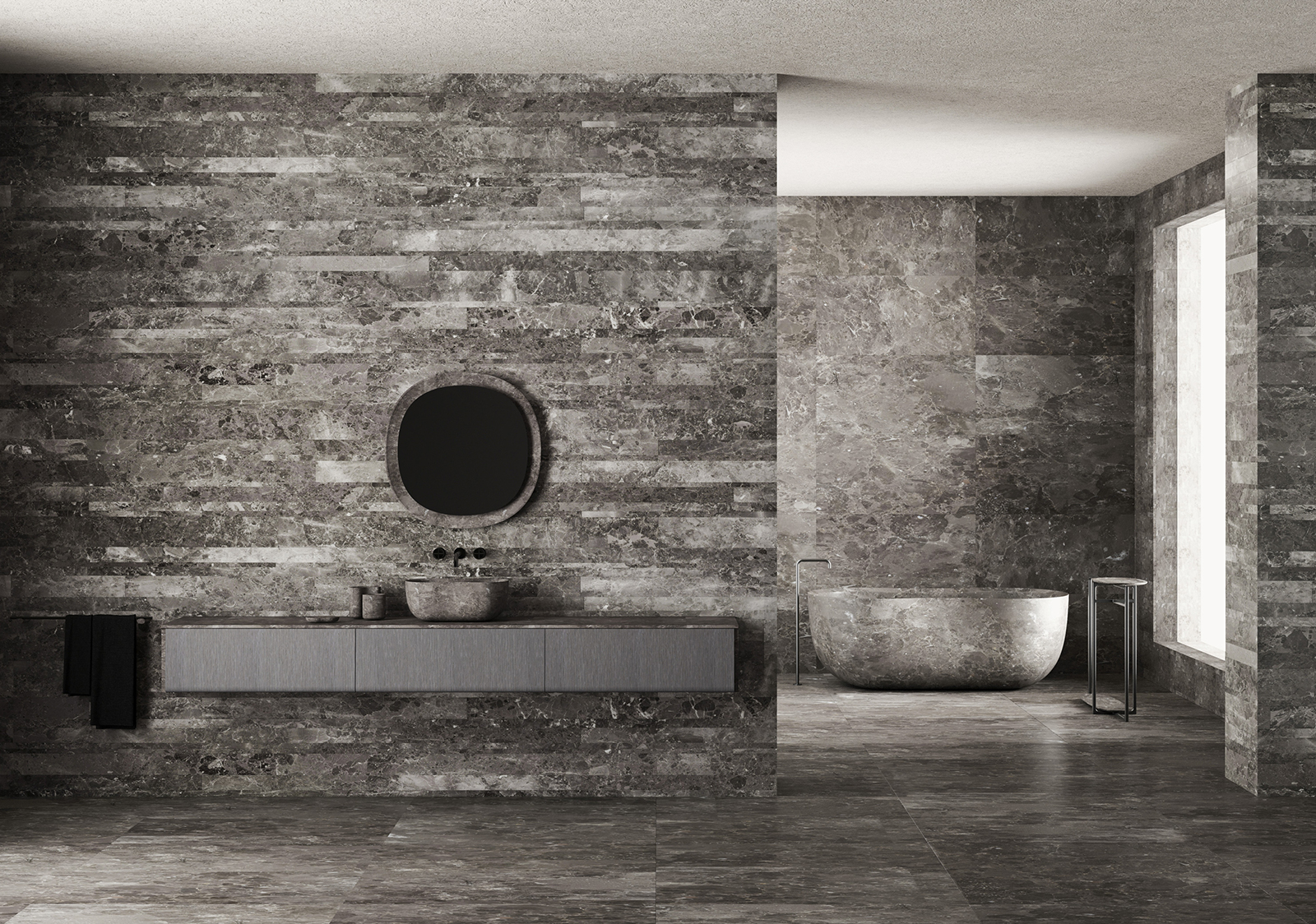
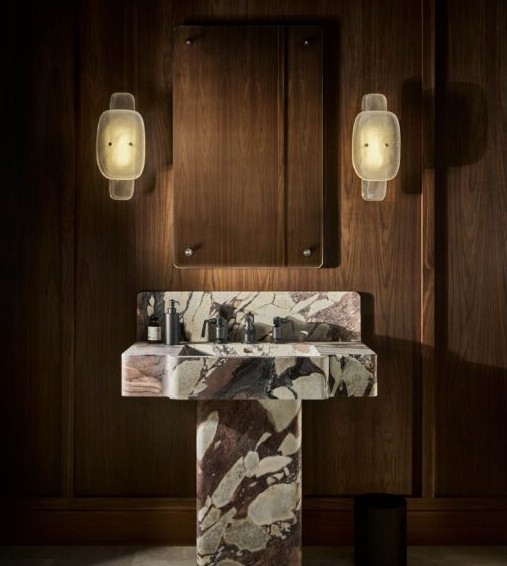
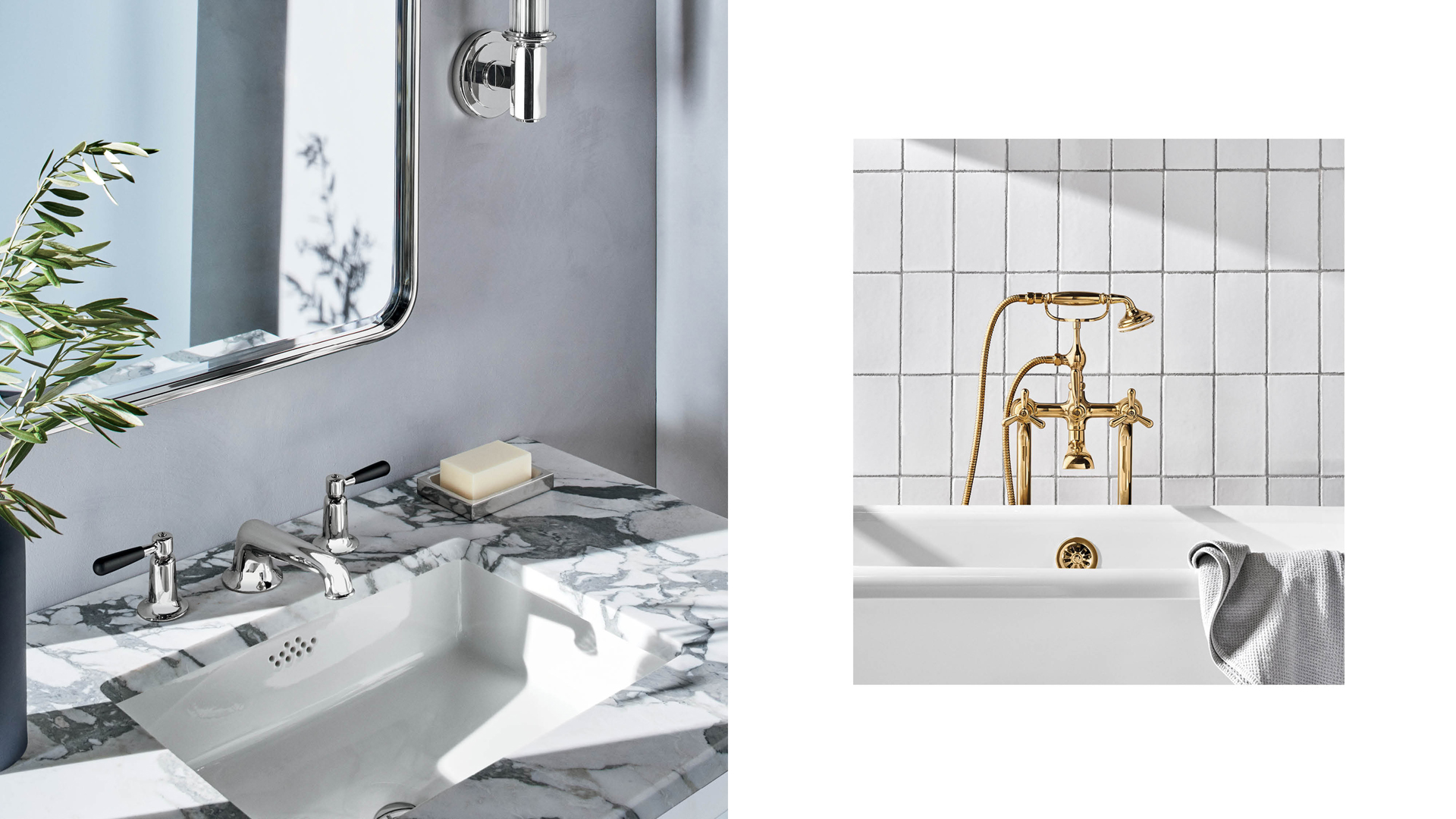
Salvatori –luxury stone vanity bringing warmth to a modern bathroom
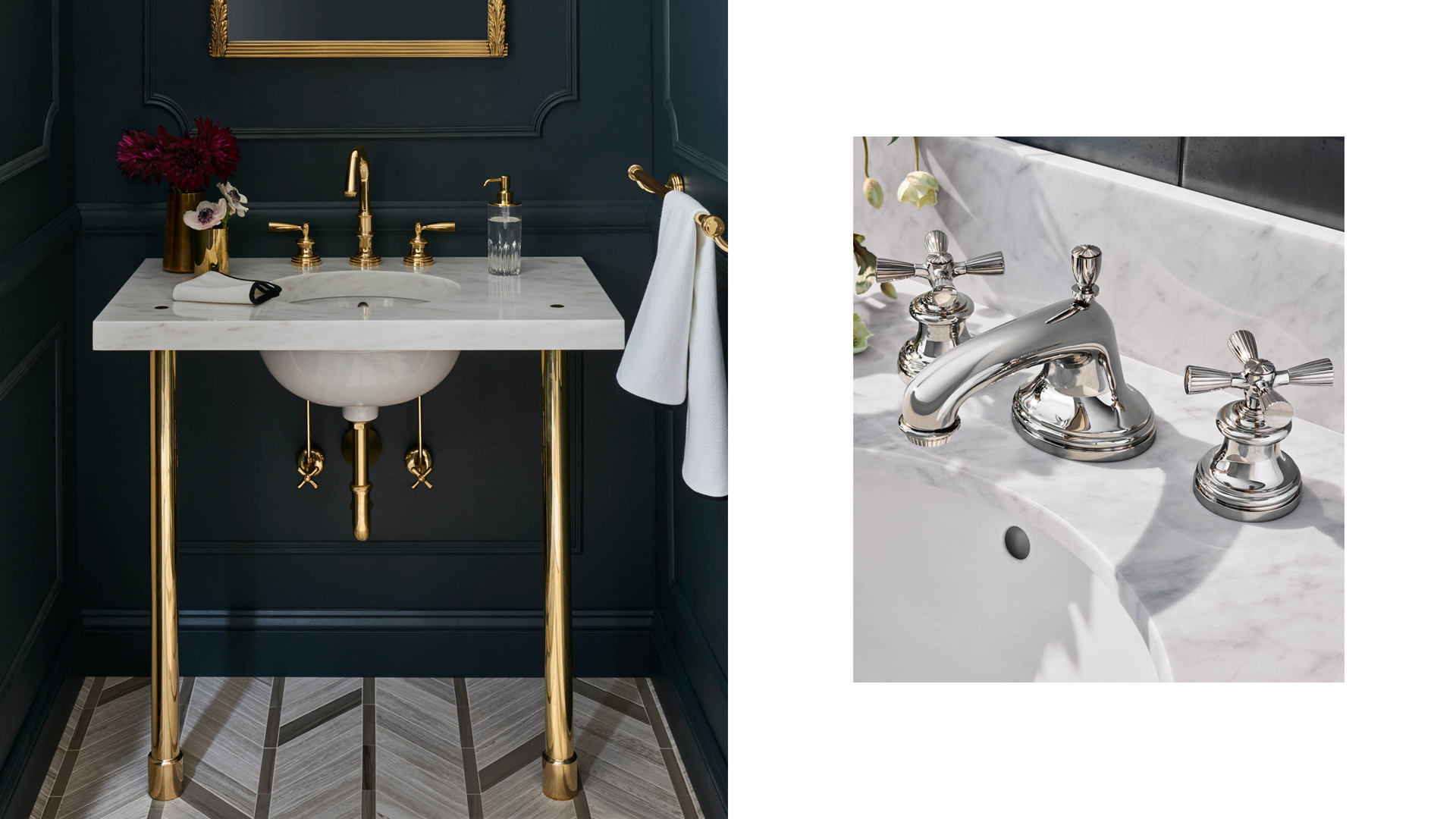
Salvatori: Sculptural Stone, Refined by Craft
Salvatori is synonymous with elevated stone craftsmanship. Working primarily in marble and limestone, Salvatori transforms raw material into sinks, vanities, tubs, and architectural surfaces that feel both ancient and contemporary.
Each piece honors the stone’s inherent character—celebrating veining, tonal shifts, and surface texture rather than concealing them. The result is stonework that feels meditative, tactile, and intentional—designed not only to be seen, but experienced.
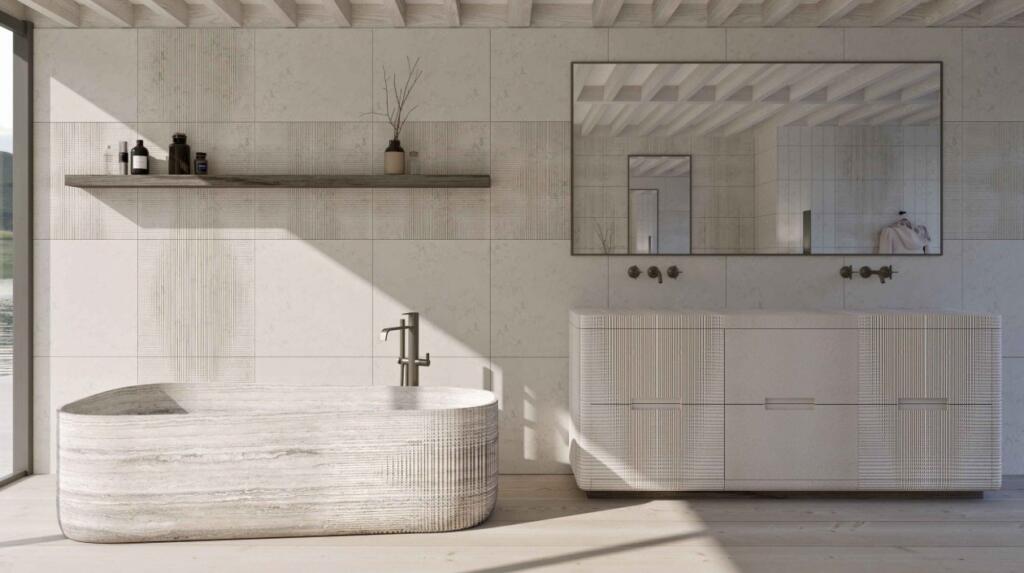
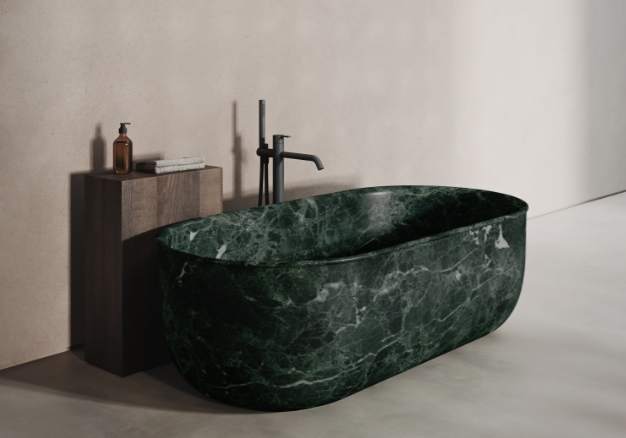
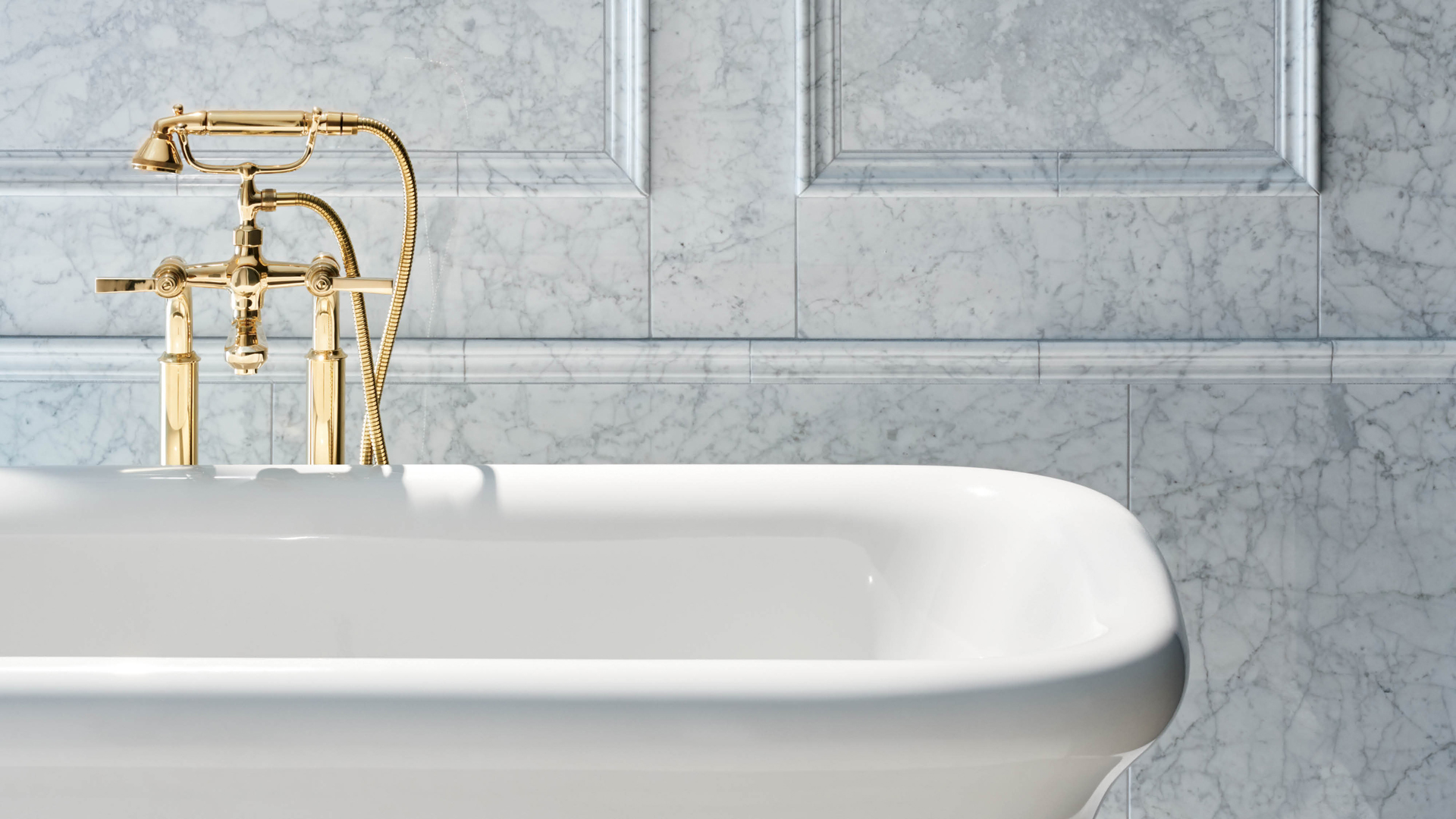
Davani – hand-carved stone bathtub in architectural interior
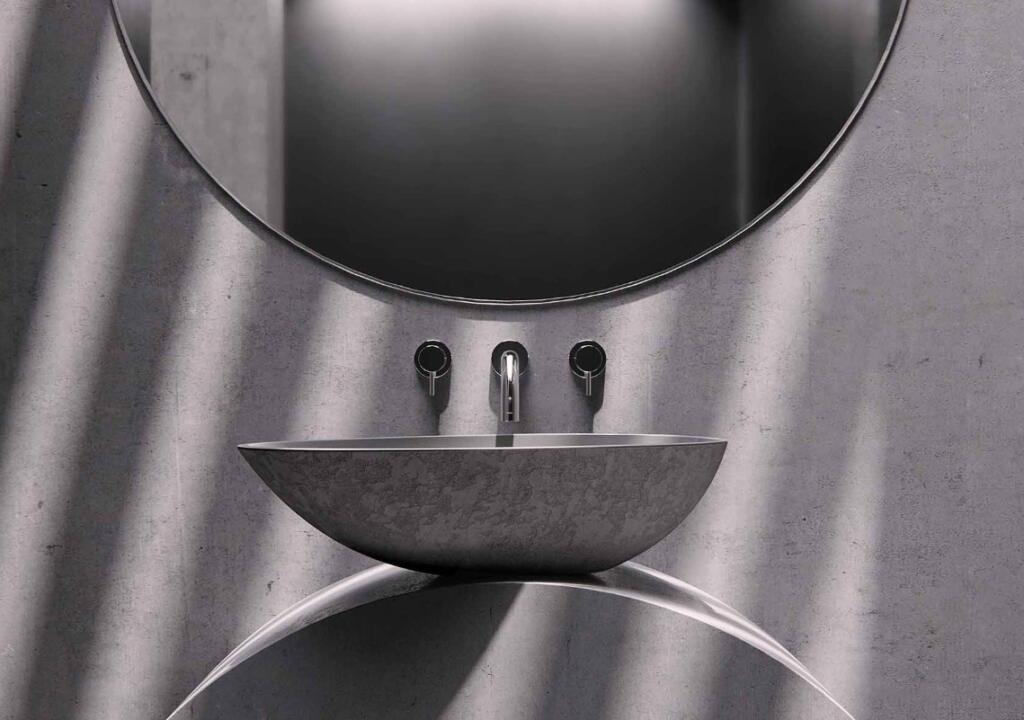
Davani: Architectural Concrete with Warmth
Davani bridges innovation and tradition through concrete and stone forms that feel architectural yet inviting. Their basins, countertops, benches, and custom elements emphasize proportion, mass, and texture.
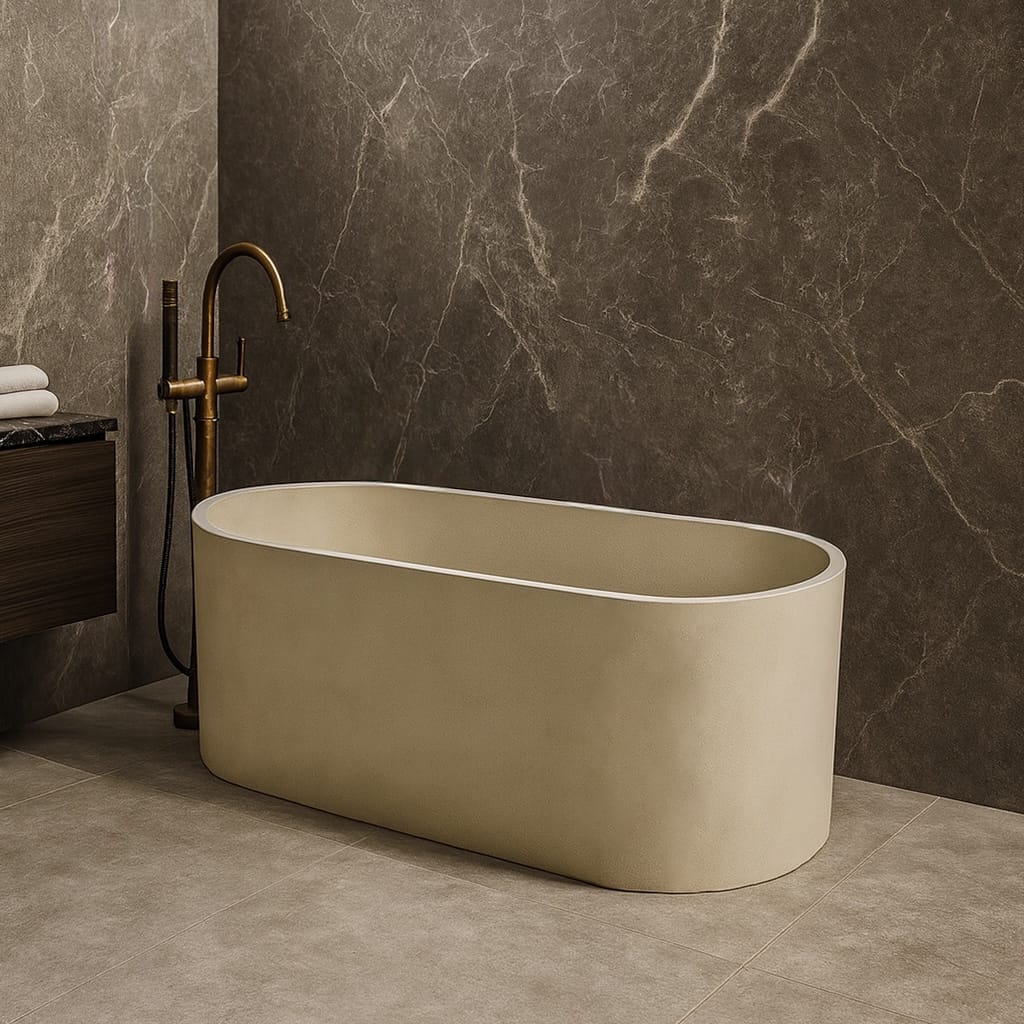
Balux – Concrete Bathroom Fixtures
Rather than treating concrete as industrial, Davani refines it—revealing a quiet softness beneath its strength. Each piece reflects balance: between structure and serenity, precision and handcraft.
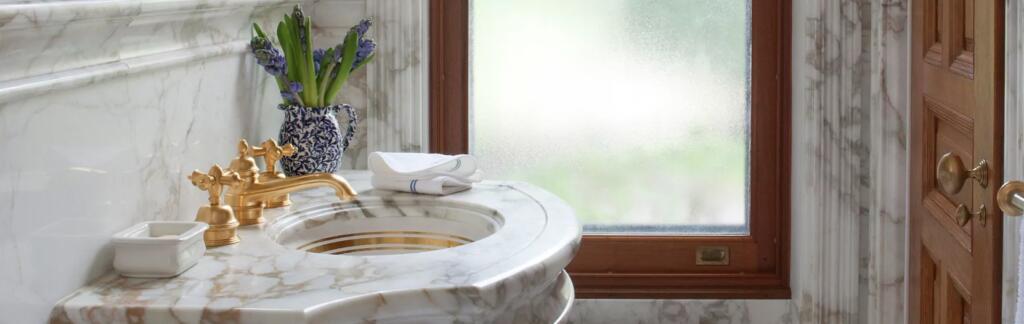
Waterworks – sculptural stone sink handcrafted from natural marble
Expanding the Language of Organic Materials
Waterworks, Sherle Wagner, Vast, and Balux further extend the expressive range of stone and concrete.
From hand-carved stone tubs and sculpted basins to richly detailed lavatory fixtures, these brands refine raw materials for contemporary living. Their work brings depth, tactility, and individuality—transforming functional elements into lasting design statements.
Sherle Wagner – luxury stone vanity bringing warmth to a modern bathroom
Designed to Age, Not Wear
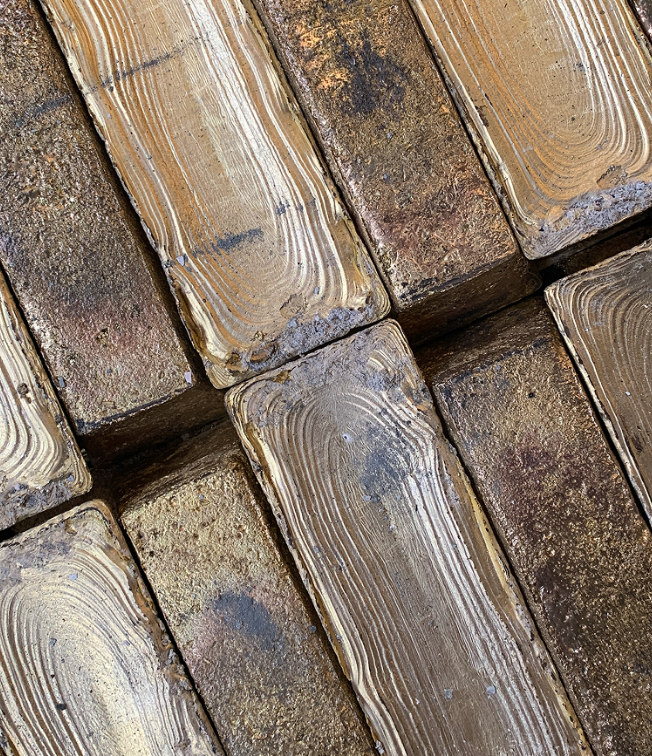
Unlike synthetic finishes, organic materials evolve. Stone and concrete develop patina rather than degradation—recording time through subtle shifts rather than visible damage. This evolution is part of their beauty.
Vast – sculptural concrete basins
In fast-moving interiors, these materials slow the experience. They ground spaces, absorb light, and offer quiet moments of connection. Choosing stone and concrete fixtures isn’t about trend—it’s about permanence, material honesty, and design that remains relevant for decades.
Refresh & Renew: Statement Metal Finishes for Kitchens & Bathrooms
Elevate kitchens and baths with refined metal finishes from Waterworks, THG Paris, and Gessi—where craftsmanship and material define daily rituals.
Metal has always been essential to kitchens and baths—but today, it carries far more than function. Through finish, form, and precision engineering, metal becomes a design language—one that shapes atmosphere, guides the eye, and enhances daily experience. In this chapter of Refresh & Renew, we explore how statement metal finishes elevate both kitchens and bathrooms through intention and craft.
For designers, metal establishes continuity across spaces. For homeowners, it defines how a space feels—every day, with every touch.
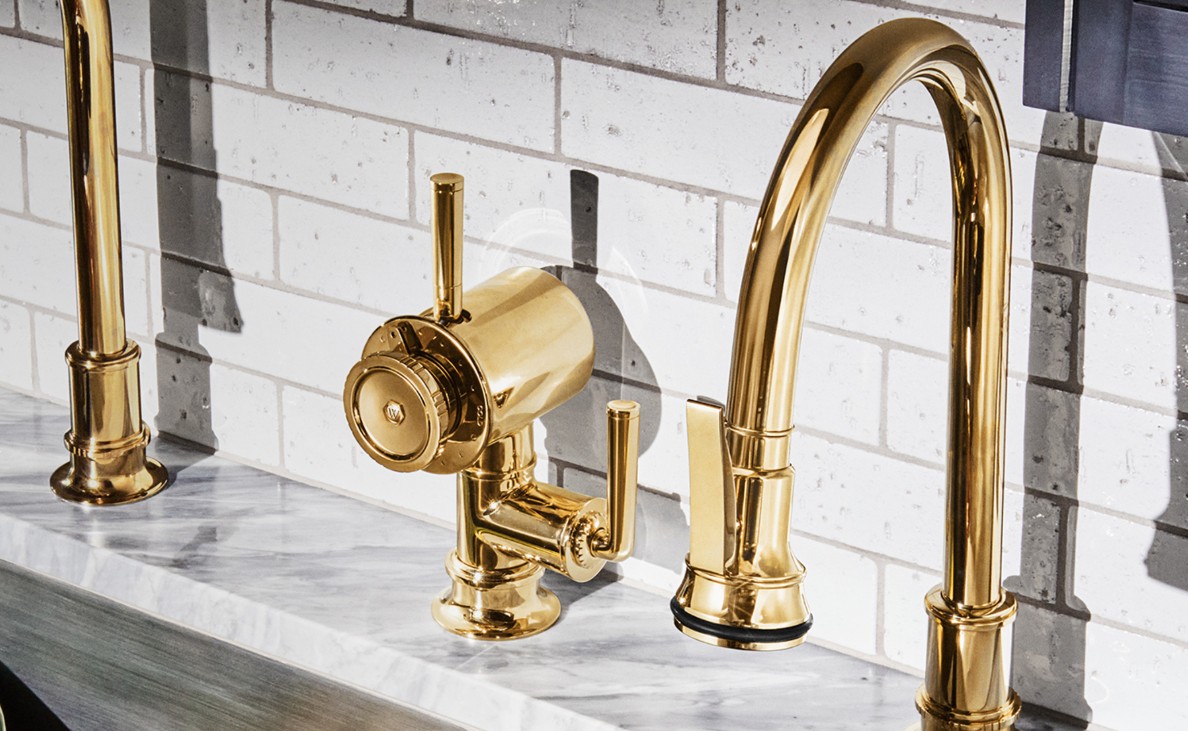
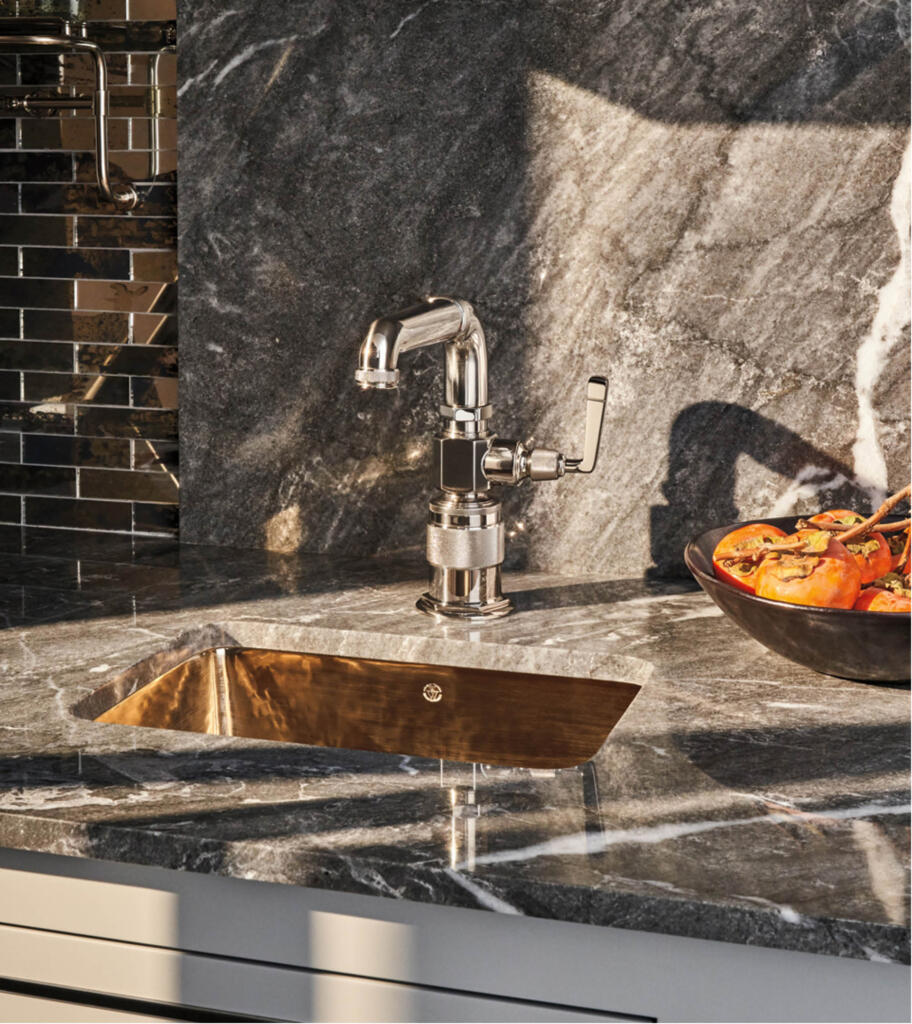
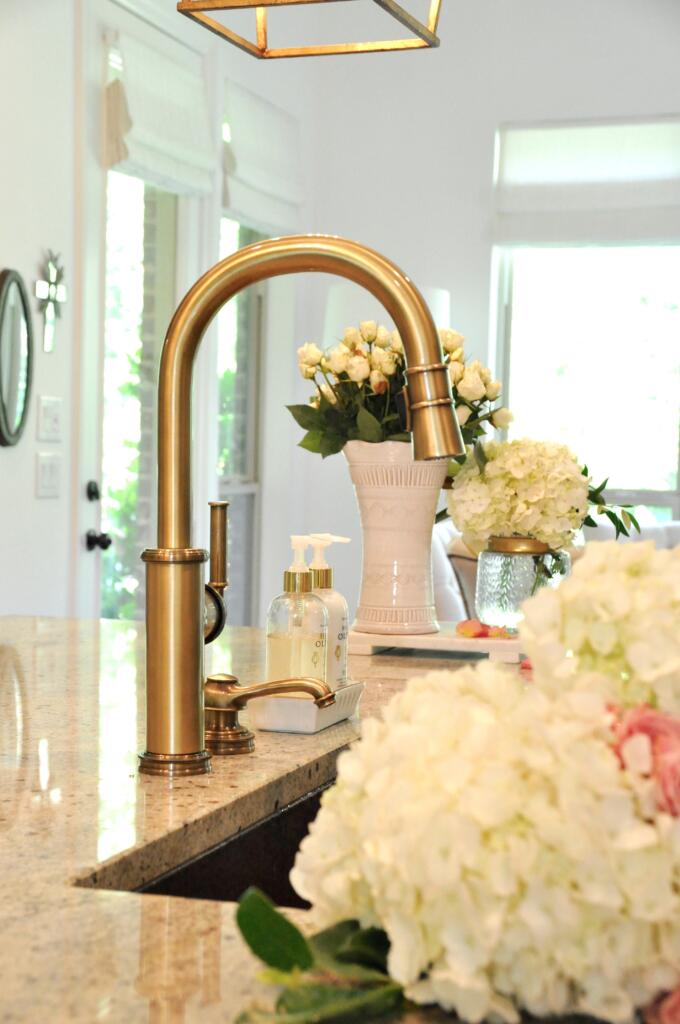
Waterworks – brass kitchen faucet in modern interior
Metal as a Design Language
Finish selection is never neutral. Warm brass introduces intimacy, soft nickel offers restraint, and burnished bronze delivers depth. When curated thoughtfully, metal finishes unify adjacent spaces, create contrast against stone or wood, and bring visual rhythm to an interior.
Rather than acting as accents, well-chosen metal fixtures become anchors—quietly shaping the mood of a room while supporting long-term durability and performance.
Waterworks approaches metal through a heritage-driven lens. Their extensive finish library allows designers to layer metals seamlessly across kitchens and baths while maintaining cohesion.
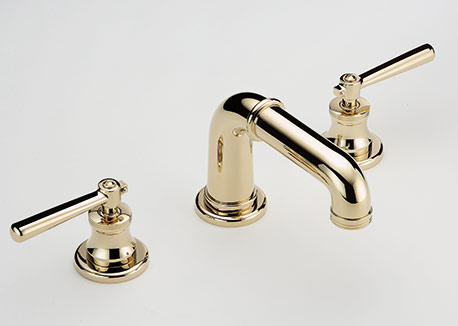
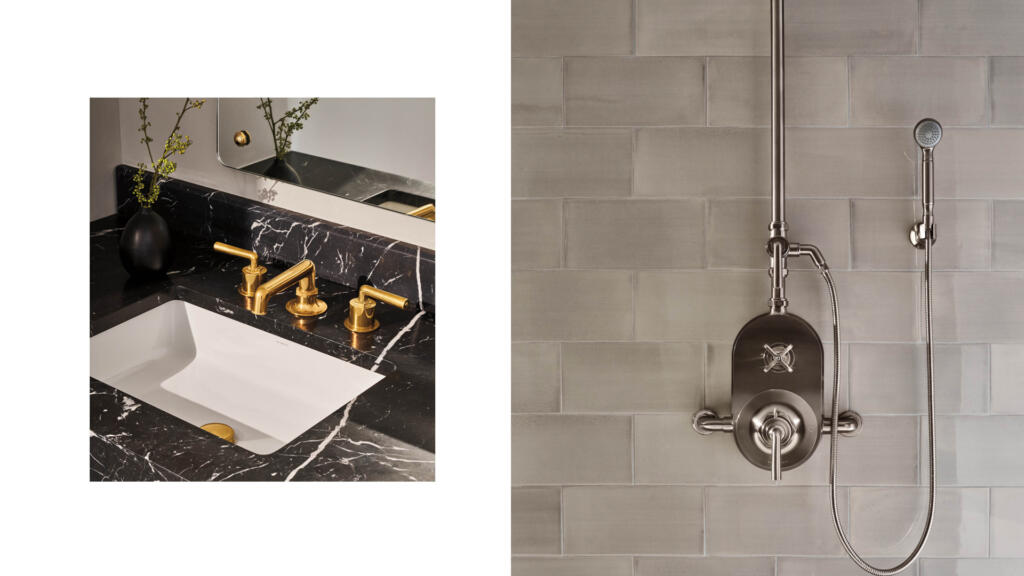
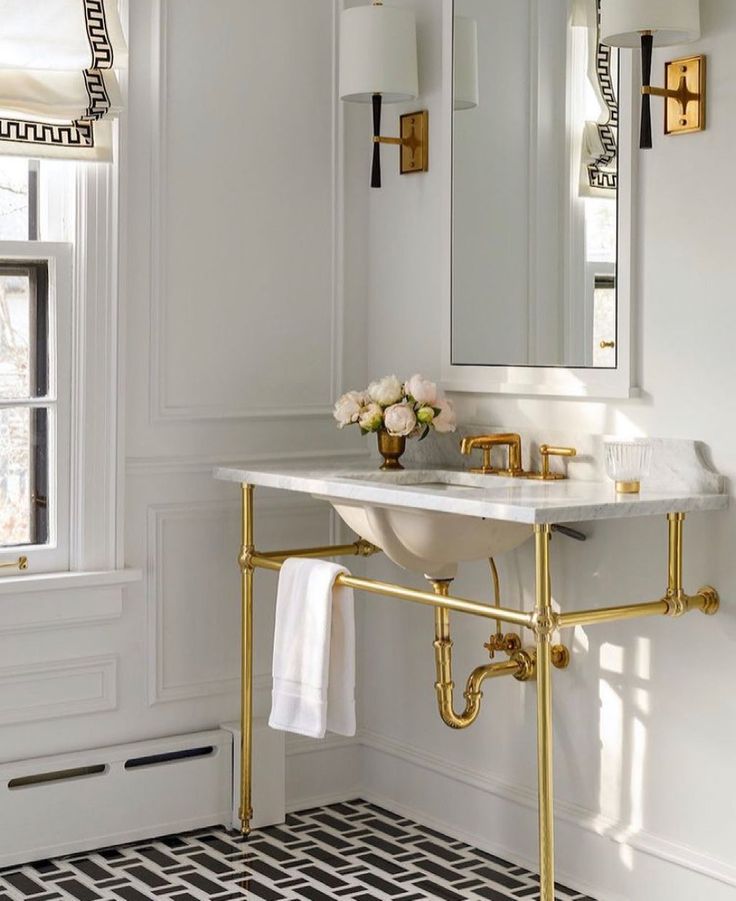
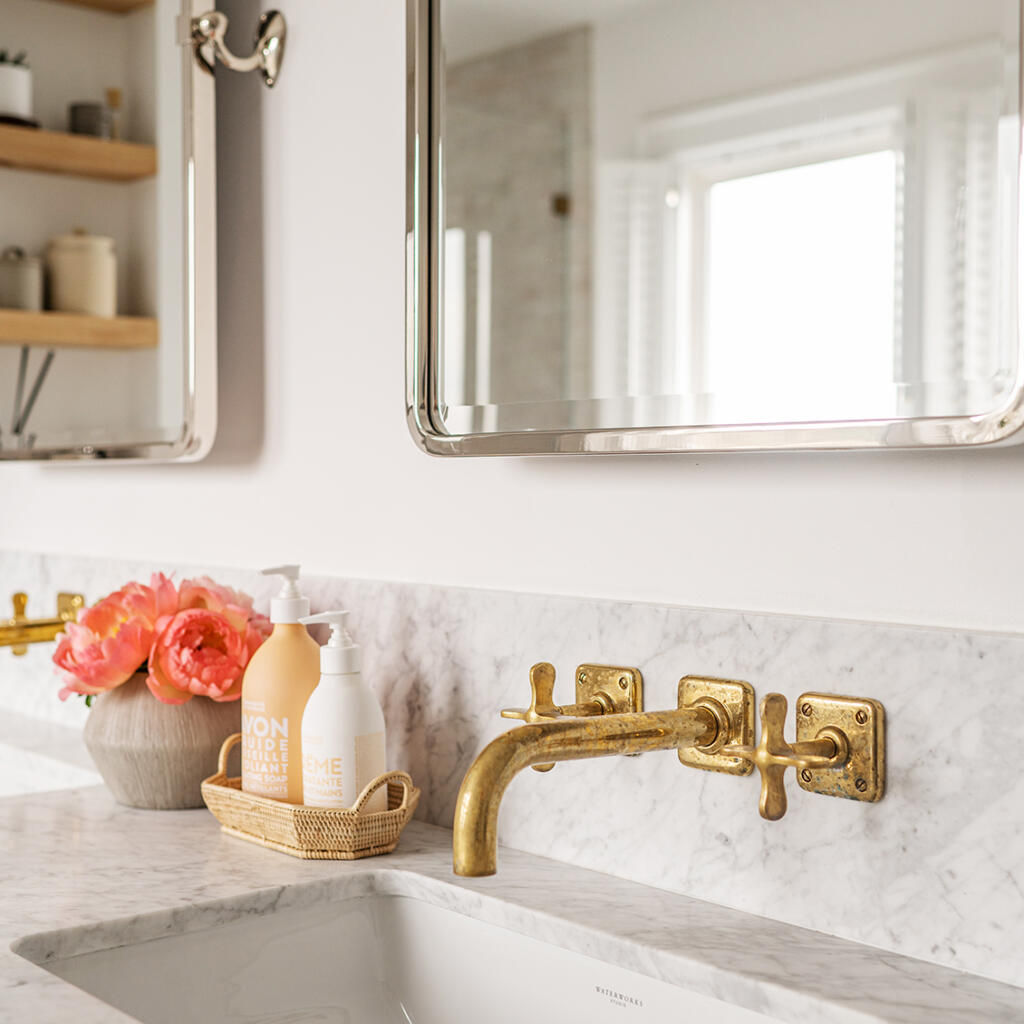
Waterworks – brass lavatory faucet
Lavatory sets and kitchen faucets balance classical proportion with modern engineering, resulting in fixtures that feel timeless rather than trend-driven. Waterworks metals are designed to age gracefully—developing character without compromising performance.
THG Paris: Haute Craftsmanship in Metal
THG Paris elevates metal through precision and artistry. Known for meticulous detailing, hand-applied finishes, and refined textures, THG fixtures feel considered at every scale.
Often subtle rather than overt, their designs reward close inspection—ideal for interiors where luxury is expressed through restraint, material quality, and craftsmanship rather than ornament.
THG – architectural metal finishes enhancing bathroom design
Gessi: Sculptural Metals for Contemporary Spaces
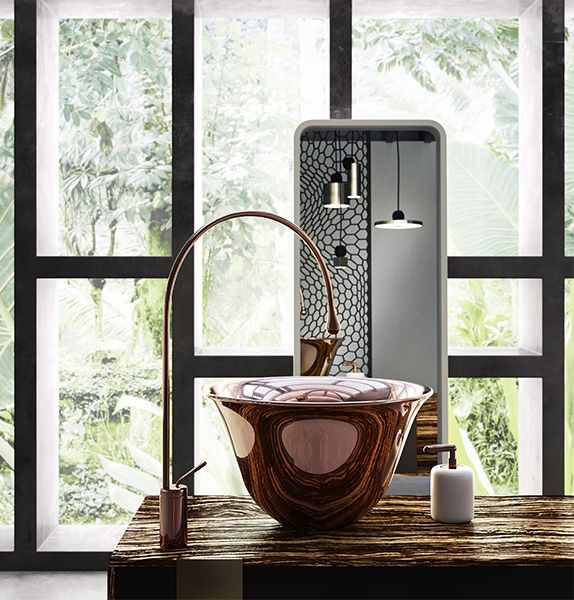
Gessi brings a distinctly modern sensibility to metal. With architectural silhouettes and innovative finishes, Gessi faucets often function as sculptural focal points within kitchens and baths.
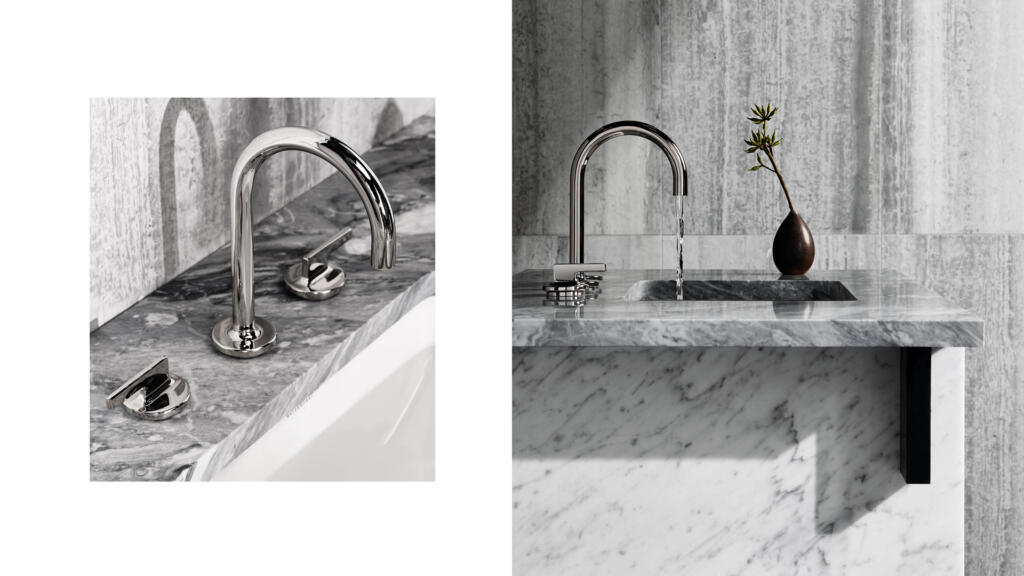
Gessi – sculptural faucet in soft metal tones
By merging advanced technology with expressive form, Gessi creates fixtures that feel forward-thinking yet refined—particularly suited to minimalist and contemporary interiors seeking visual clarity with impact.
A Sensory Experience, Not Just a Surface
Metal is inherently tactile. The weight of a handle, the resistance of a lever, the warmth of a brushed surface—all influence how a space is experienced. High-quality metal finishes transform routine interactions into moments of quiet pleasure.
Durability matters, but so does feel. Well-crafted metal fixtures support daily rituals while reinforcing a sense of permanence and quality.
Designing with Intention
Refresh & Renew encourages a material-first mindset. Metal, when executed with care, offers longevity, emotional resonance, and architectural clarity. Choosing refined metal finishes isn’t simply a design decision—it’s an investment in how a space performs, ages, and is lived in.
Refresh & Renew: The Wellness Benefits of Luxury Bathing & Filtered Water
Discover how luxury bathing tubs and filtered drinking water support wellness and renewal. Explore Balux, Claybrook, Waterworks, Vast, Inbani, and Zip Water.
The beginning of a new year invites renewal—an opportunity to reset routines and prioritize well-being. At Alexander Marchant, Refresh & Renew begins with water: the most elemental and restorative force in daily life. From immersive bathing rituals to cleaner, healthier drinking water, thoughtfully designed products transform everyday moments into acts of wellness.
For designers, water-driven spaces shape experience through material, form, and performance. For homeowners, they offer tangible upgrades—better sleep, reduced stress, and a calmer daily rhythm.
Balux – spa-inspired bathroom design
The Wellness Benefits of Luxury Bathing
Bathing has long been recognized as a restorative ritual. Beyond relaxation, a properly designed bath supports circulation, eases muscle tension, reduces stress, and promotes mental clarity. Today’s luxury soaking tubs elevate these benefits through hydrotherapy-conscious design, superior heat retention, and material integrity.
Balux: Sculptural Immersion and Stillness
Balux creates soaking tubs that feel carved rather than manufactured. Defined by organic silhouettes and deep basins, Balux designs encourage full-body immersion—supporting hydrotherapy through water depth and ergonomic form.
These tubs invite stillness. Warmth lingers, the body relaxes fully, and bathing becomes a deliberate pause rather than a rushed routine.
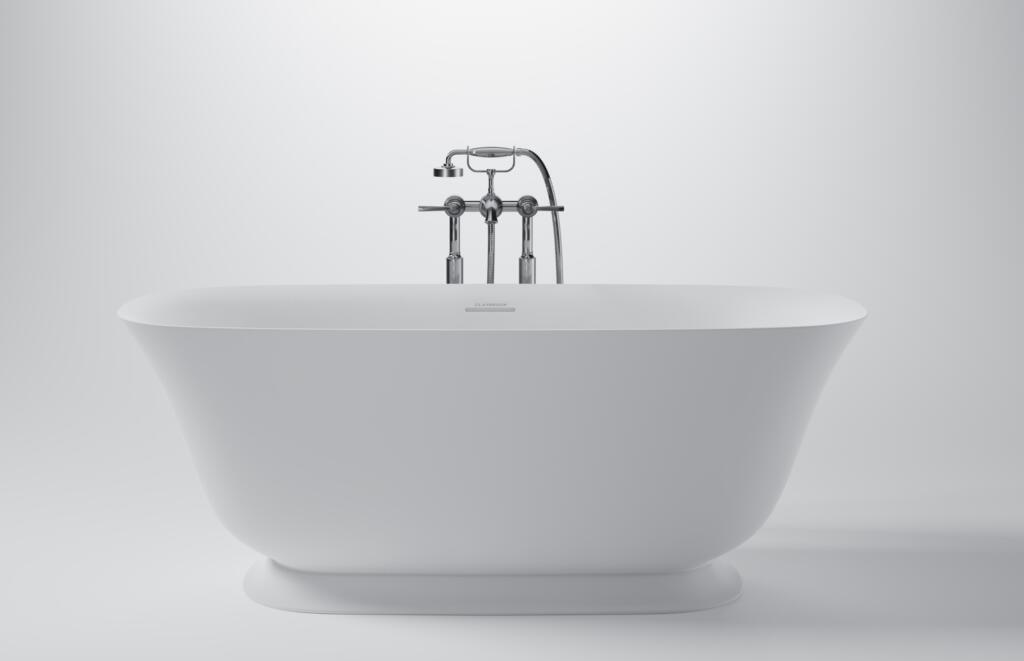
Claybrook – luxury soaking tub designed for spa-inspired wellness
Claybrook approaches bathing through architectural clarity. Their tubs and basins are defined by refined proportions and disciplined silhouettes, balancing visual restraint with physical comfort.
Designed for spa-driven interiors, Claybrook bathing pieces feel grounding and restorative—supporting wellness through quiet precision rather than excess.
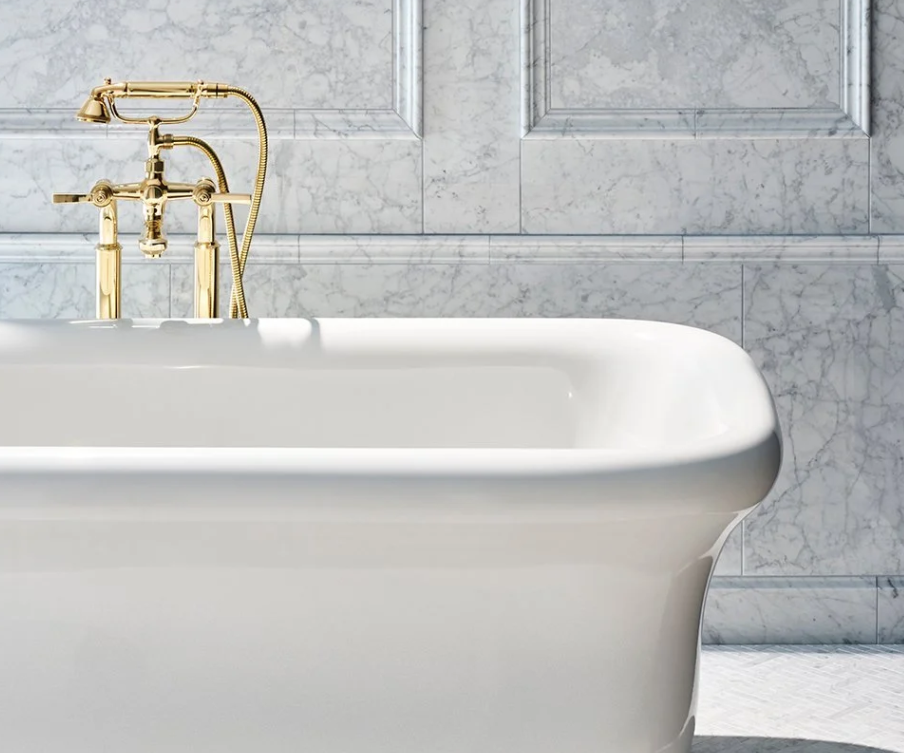
Waterworks – luxury bathing tubs
Waterworks: Heritage Craft and Heat Retention
Waterworks continues to define luxury bathing through heritage craftsmanship and advanced engineering. Their cast iron and stone tubs are renowned for exceptional heat retention—extending the physical benefits of soaking.
Paired with thoughtfully designed fittings, Waterworks transforms the bath from an occasional indulgence into a daily ritual rooted in comfort and longevity.
Vast & Inbani: Wellness Through Form and Restraint
Vast and Inbani introduce bathing solutions that blur the line between functional fixture and sculptural object.
Vast emphasizes tactility and connection to nature through stone-inspired forms, while Inbani’s minimalist approach promotes calm through reduction. Both demonstrate that wellness-focused design often emerges from restraint, not complexity.
Vast – minimalist bathroom with wellness-focused bath design
Hydration as a Foundation of Renewal
While bathing restores the body, hydration fuels clarity, energy, and long-term health. Clean, filtered drinking water is essential to everyday wellness—and seamlessly integrated solutions make consistency effortless.
Zip Water delivers advanced filtration systems that provide instant access to purified still, sparkling, or boiling water. By improving taste and removing impurities, Zip Water supports better hydration habits while reducing reliance on bottled water.
Integrated directly into kitchens and workspaces, these systems align wellness with convenience and sustainability.
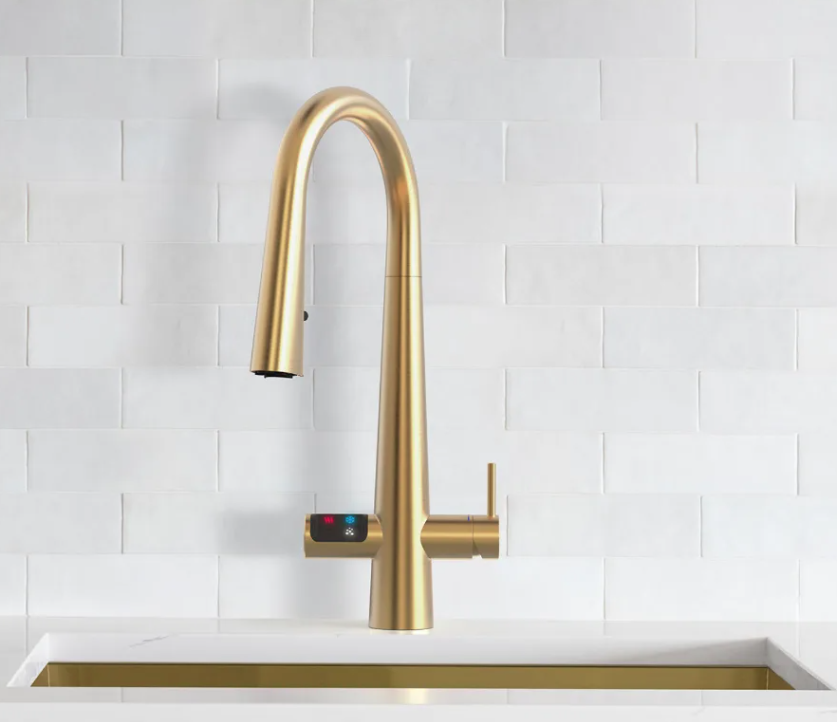
Zip Water – Integrated filtered water tap supporting daily hydration
Designing for a Healthier Start
Refresh & Renew is not about grand gestures. It’s about meaningful upgrades that elevate daily life: a deeper soak, cleaner water, a quieter moment in a busy day.
By choosing products that support both physical wellness and emotional balance, interiors become restorative environments—not just beautiful ones. At Alexander Marchant, we curate brands that understand this balance—where performance, material integrity, and design intention work together to support a healthier year ahead.
We always look forward to Waterworks’ kitchen updates, because no one refreshes a collection quite like they do: thoughtfully, beautifully, and with a clear understanding of how real kitchens function. This season, Waterworks has refined several of its most-loved pieces, offering more options, smarter functionality, and solutions that support nearly any kitchen layout or workflow. Below are the highlights we are most excited to share.
Henry Chronos: A Bold New Innovation
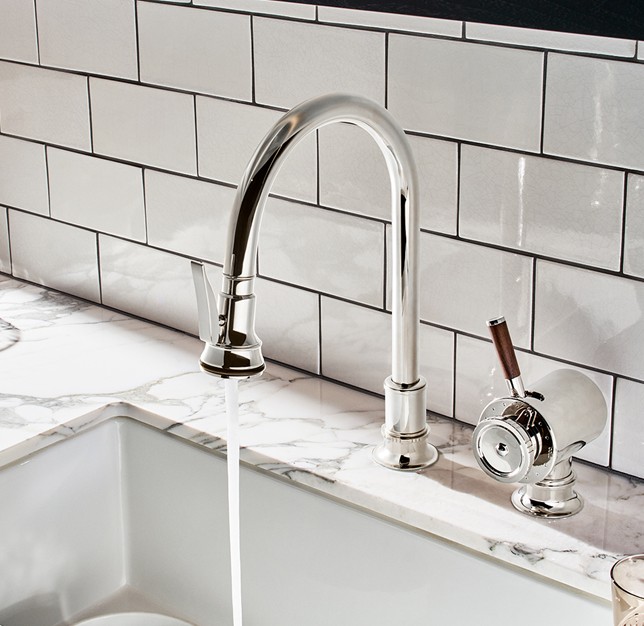
Meet Henry Chronos, the newest and perhaps most striking addition to the Waterworks kitchen lineup. It introduces the first-ever thermal precision system in a kitchen faucet, delivering exceptionally steady and accurate temperature control. Its design leans into bold industrial character with strong lines, substantial handles, and that signature Waterworks weight that feels architectural and intentional. Chronos blends modern performance with timeless presence, creating a truly memorable statement piece in any luxury kitchen.
The Enhanced Henry Pulldown
The beloved Henry pulldown has also received a meaningful upgrade. The glide is smoother and more controlled, transitions between sprays feel more seamless, and the balance in hand is noticeably improved. It remains the iconic Henry silhouette, refined for everyday performance. For those who love Henry’s classic aesthetic but need contemporary functionality, this update is an ideal fit.
New Midsize Faucets and Bar Taps
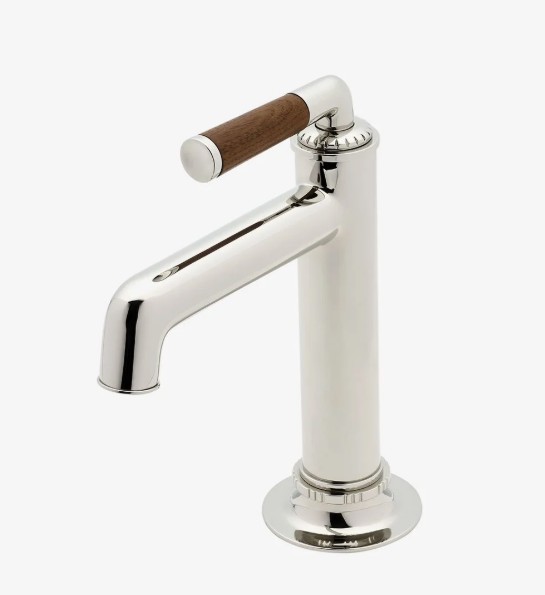
Waterworks has expanded its offering of midsize faucets and bar taps that are perfect for prep sinks, butler’s pantries, sculleries, and secondary spaces where a full-size faucet may feel overwhelming. These new pieces are beautifully scaled and thoughtfully proportioned, and they are now available across more collections. This subtle shift makes creating a cohesive kitchen design far easier.
A Waterworks Solution for Every Kitchen
With these updates, Waterworks now covers nearly every kitchen application including large island sinks, compact back counters, prep zones, wet bars, and everything in between. Finishes are consistent across collections, engineering refinements ensure smooth performance, and the details are cleaner than ever. Whether the project is modern, traditional, minimal, or richly layered, there is a Waterworks solution that feels custom-made for the space.
Your Partner in Design
At Alexander Marchant, we support your design journey from guiding clients toward approachable entry-level options to curating complete luxury kitchens and baths. Waterworks offers an exceptional fit for projects of every scale, and together we can help your clients experience a noticeable difference in quality, craftsmanship, and performance.
If you would like to explore these new kitchen offerings in person, visit us at any of our showroom locations across Texas and Oklahoma. True luxury is not only seen. It is felt.
Selecting Waterworks plumbing fixtures is more than a design choice—it’s a statement. For decades, Waterworks has set the standard for what it means to live with luxury fixtures that transcend trends. Their best-sellers have earned their place not simply through popularity, but because they embody the brand’s enduring hallmarks: craftsmanship, timeless design, and an undeniable sense of presence.
At the heart of Waterworks’ appeal is a rare ability to blend artistry with engineering in a way that feels both timeless and tangible. Every faucet, tub, and fitting is conceived as more than a utilitarian object—it’s a tactile experience. Lift a Waterworks faucet and you immediately sense its weight and precision. The hand-finishing, the clean geometry, the meticulous detailing—nothing feels incidental. Everything is intentional, and it shows.
This design integrity extends to form. While trends come and go, Waterworks collections are grounded in classic proportions and enduring silhouettes that never lose their relevance. A piece specified today will carry the same elegance decades from now, making it an investment in lasting beauty rather than a fleeting moment.
Then there are the materials. Brass, cast iron, stone, and natural finishes are chosen not just for their beauty but for how they evolve. Rather than deteriorating, they develop a rich patina over time—a visual narrative of daily use and care. In a world of the disposable, Waterworks creates fixtures intended to live with you for generations.
Henry: Classic Meets Industrial
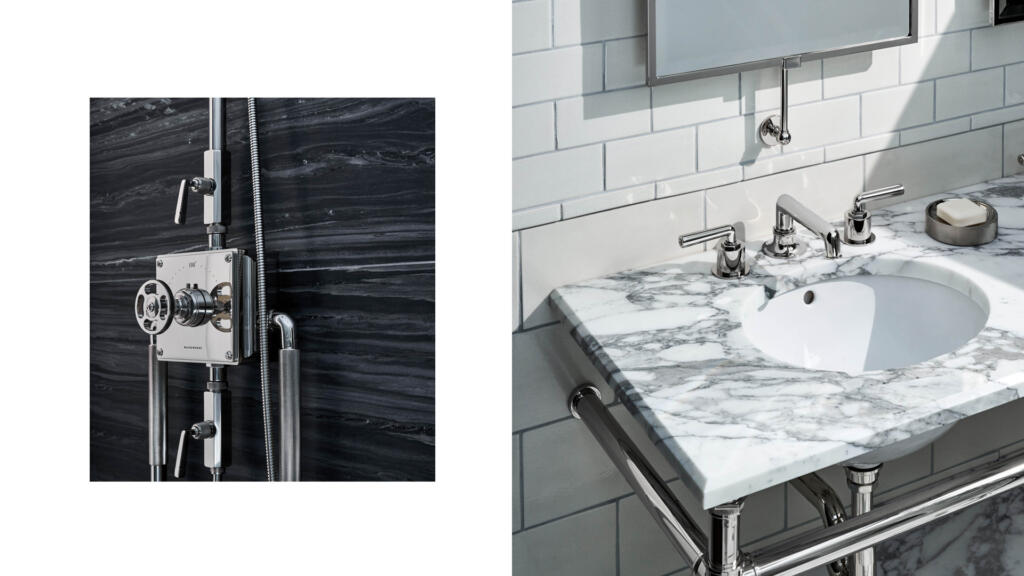
The Henry Collection is a love letter to early 20th-century engineering. Exposed screws, crisp geometry, and architectural lines strike a balance between boldness and refinement. In polished nickel, burnished brass, or gold, Henry brings quiet strength to any space.
R.W. Atlas: Bold and Iconic
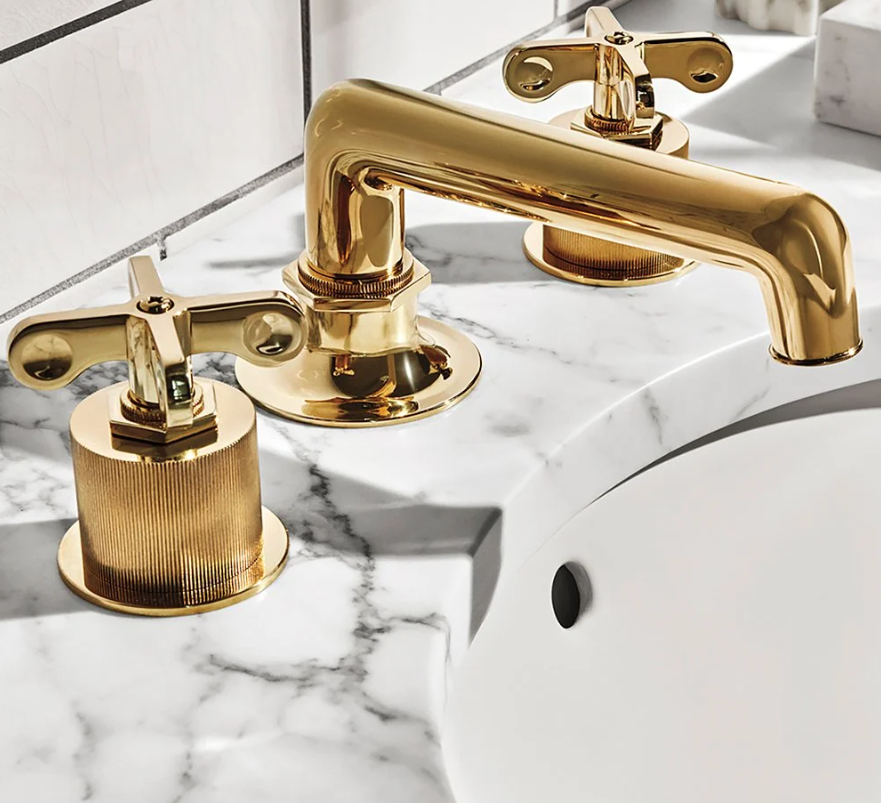
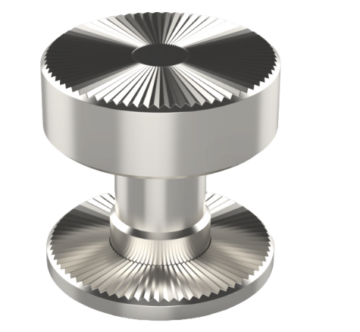
Inspired by machinery and architecture, R.W. Atlas showcases solid brass construction and distinctive wheel-inspired handles. Its knurled detailing and robust silhouette embody strength and precision—making it a designer favorite worldwide.
Flyte: Minimalist Luxury
The Flyte Collection channels modern serenity with smooth curves and seamless lines. It’s proof that minimalism, when executed with intention, can be as luxurious as the most ornate designs.
Empire Tub: A SculpturalCenterpiece
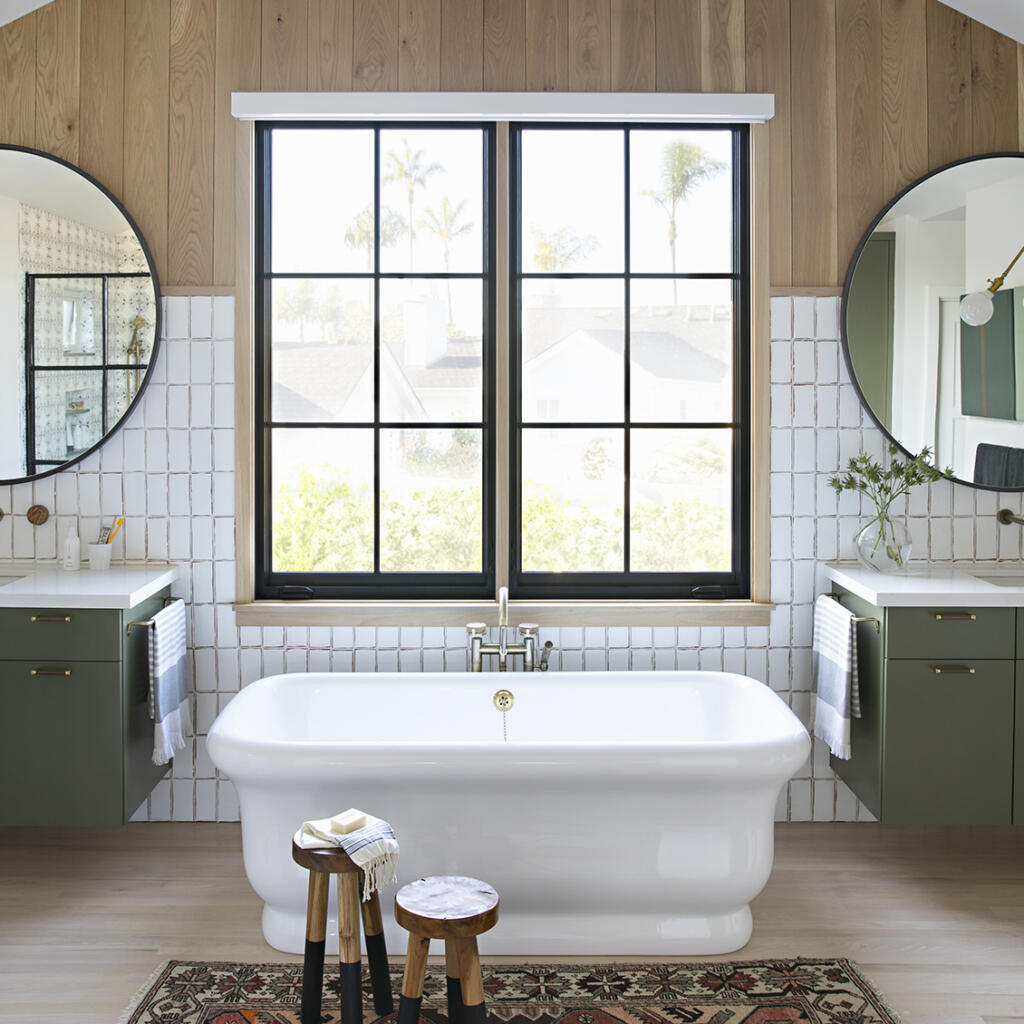
The Empire Tub stands as both centerpiece and sanctuary. With elegant proportions and sculptural form, it transforms the bath into a personal retreat of elegance and calm.
Highgate: The Kitchen Showstopper
The Highgate faucet combines classic bridge design with modern functionality. Its refined detailing and superior performance make it the perfect focal point for gourmet kitchens and everyday use alike.
Visit an Alexander Marchant Showroom
Waterworks’ best-selling fixtures are more than functional pieces—they’re heirlooms, designed to be lived with and loved. Visit Alexander Marchant showrooms in Austin, San Antonio, or Oklahoma City to explore Waterworks collections in person. Our expert consultants will guide you through finishes, configurations, and custom options to help bring your vision to life.
Creating a Cohesive Design Language Across the Home
In the world of interior design, it’s often the details that leave the most lasting impression. A thoughtfully selected faucet, a beautifully proportioned shower system, or an impeccably crafted accessory can transform a utilitarian space into something truly exceptional. Among the brands that understand this transformative power, Waterworks stands apart.
Celebrated for its heritage craftsmanship, refined design language, and enduring quality, Waterworks has long been the go-to choice for designers who want to bring timeless elegance into kitchens and baths. Beyond its visual appeal, Waterworks offers a tactile, everyday experience that quietly elevates the way people live in their homes.
Here are five key points that make the case for Waterworks easy to communicate to clients.
Craftsmanship That Lasts
Design trends evolve, but true craftsmanship never goes out of style. Waterworks fixtures are engineered to last, both in aesthetic and in performance. Unlike mass-market alternatives that often require replacement within a few years, Waterworks invests in superior materials and meticulous construction. The result is a product that not only looks beautiful on day one but continues to perform flawlessly for decades.
A Cohesive Design LanguageAcross the Home
One of Waterworks’ greatest strengths is its ability to create a unified aesthetic across the entire home. Each collection encompasses faucets, shower systems, accessories, and hardware, allowing designers to carry a consistent design vision from the kitchen to the primary bath and beyond.
This cohesive approach resonates deeply with clients who appreciate harmony and attention to detail. It also streamlines the specification process, ensuring that every fixture works seamlessly within the larger design narrative.
Collections for Every Vision and Budget
While Waterworks is often associated with high-end luxury, the brand offers a diverse range of collections to suit a variety of budgets. From elegant entry-level options to showstopping statement pieces, Waterworks provides flexibility without compromising quality.
This breadth allows designers to tailor their specifications to each project’s scope and client expectations, making the brand accessible to more homeowners than many realize.
Everyday Luxury, Redefined
Few design elements are experienced as frequently as plumbing fixtures. From the first turn of the tap in the morning to a restorative evening shower, Waterworks transforms daily routines into moments of quiet indulgence.
Clients immediately notice the difference: the weight of a handle, the precision of movement, the refined finishes. It’s a sensory experience that elevates even the most ordinary tasks.
Long-Term Value and Resale Appeal
For clients with an eye on future resale, Waterworks fixtures offer undeniable appeal. Luxury plumbing details signal thoughtful design, long-term quality, and a level of finish that sets a home apart in a competitive market. Homes equipped with these fixtures often stand out to discerning buyers, reinforcing the value of choosing quality from the start.
Specifying Waterworks is about more than selecting fixtures—it’s about curating an experience. With its unmatched craftsmanship, timeless style, and ability to create a cohesive design language throughout the home, Waterworks offers designers and clients alike a way to elevate the everyday.
And by partnering with local showrooms like Alexander Marchant, designers gain an added layer of expertise and service. Visit Alexander Marchant showrooms in Austin, San Antonio, or Oklahoma City to explore Waterworks collections in person. Our expert consultants will guide you through finishes, configurations, and custom options to help bring your vision to life.
Whether the vision is modern minimalism, classic refinement, or something in between, Waterworks plumbing fixtures provide the foundation for spaces that are both beautiful and enduring.
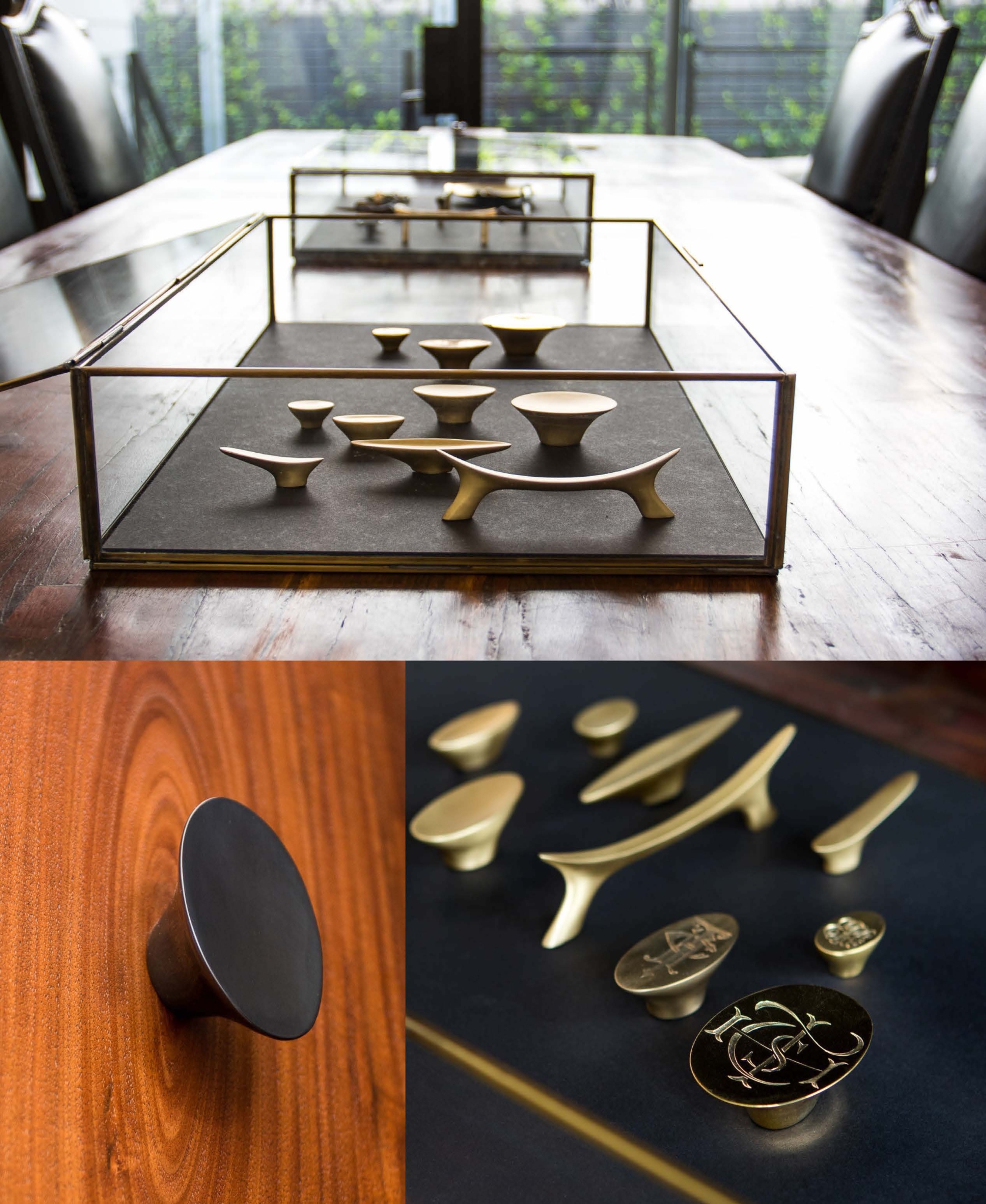
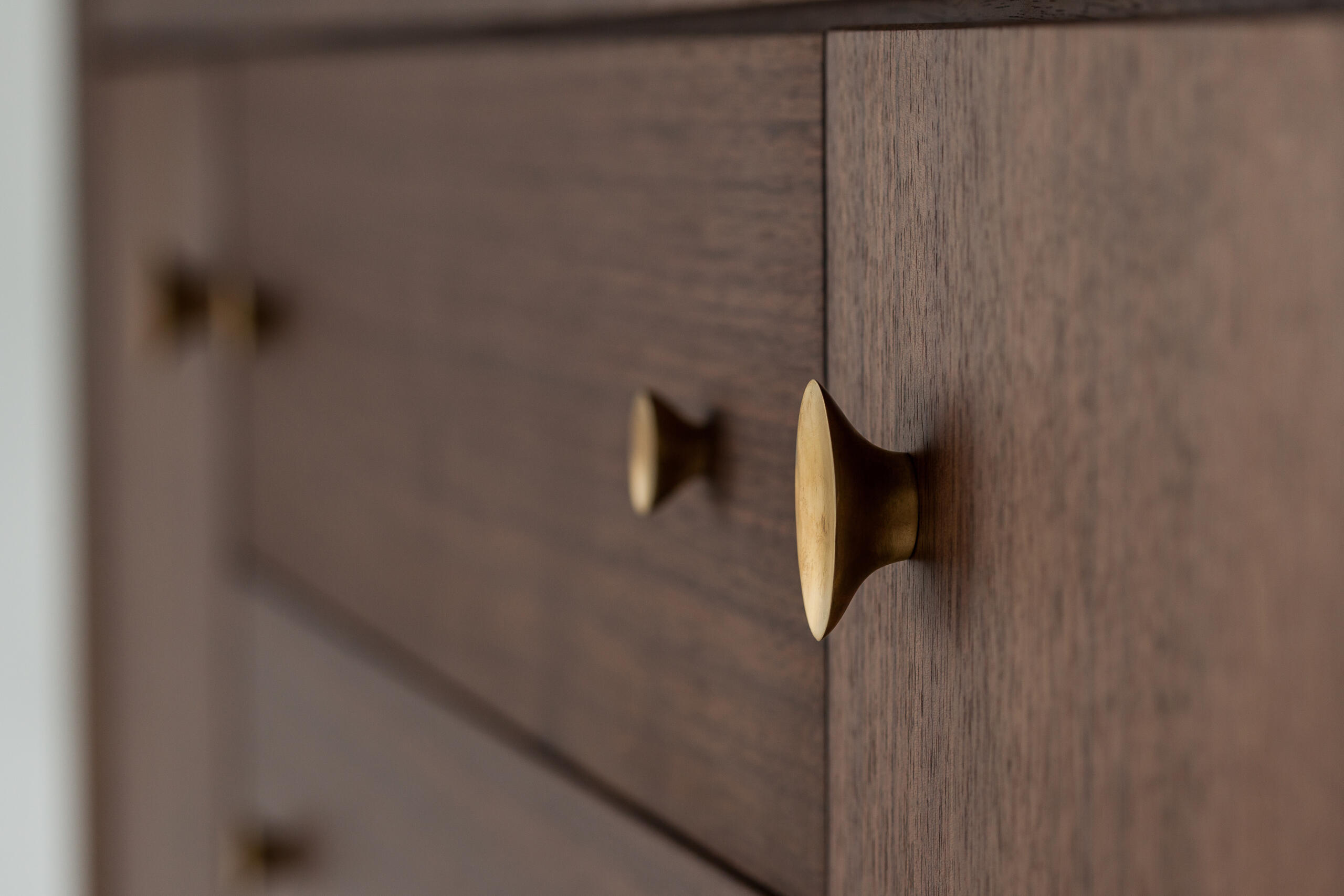
Let’s be real: hardware doesn’t always get the spotlight it deserves. However, the truth is that it’s one of the easiest ways to make a space feel elevated, personal, and intentional. The right cabinet knob or drawer pull can completely transform furniture or millwork — and the most beautiful designs don’t come from mass-market factories. They’re being designed and handmade by artists and studios who treat artisan hardware like sculpture.
That’s the beauty of small-batch, handmade hardware collections. Brands like Marion Cage, Lo & Co, Mi & Gei, Chapman & Bose, PullCast, and Ged Kennett are redefining what luxury cabinet hardware can be — focusing on craftsmanship, design-forward details, and materials in a way that feels fresh, intentional, and seriously beautiful.
Think of artisan hardware as the finishing touch you didn’t know you needed — the detail that proves every element was carefully considered. It shows that someone thought about the space. In a world full of sameness, there is something refreshing about handcrafted hardware designed in small batches, by people who actually care about design and craft.
Whether you’re designing your dream kitchen or simply upgrading knobs on a vintage dresser, these luxury hardware brands deliver impact far beyond their size. The smallest details often speak the loudest.
At Alexander Marchant, we’re proud to represent these six artisan hardware makers at out showrooms in Austin, San Antonio and Oklahoma City. Because just like the perfect pair of shoes, small-batch hardware completes the look, expresses your personality, and makes your space feel truly designed.
Marion Cage
Based in New Orleans, Marion Cage brings an architectural eye and jeweler’s precision to hardware design. The line is clean yet tactile, luxurious yet restrained — a testament to Marion’s background in both metalsmithing and industrial design. Each piece feels deliberate and quietly daring, often blending wood, bronze, and enamel in compositions that straddle the line between sculpture and utility.
Sydney-based Lo & Co has quickly earned a cult following for its modern, geometric silhouettes and fearless use of finishes — from brushed brass to matte black and marble. There’s a playful elegance to their collections, with forms that feel fresh and fashion-forward, often drawing inspiration from Art Deco and modernist references. Perfect for interiors that lean contemporary but want a bit of edge.
Founded by a husband-and-wife duo, Mi & Gei (short for “mission” and “gesture”) celebrates the tactility of handcraft. Their designs are often inspired by global travels and traditional materials — think hand-hammered brass, intricate woodwork, and an organic sense of form. Every knob and pull carries with it a sense of story and place, offering warmth and character to any space.
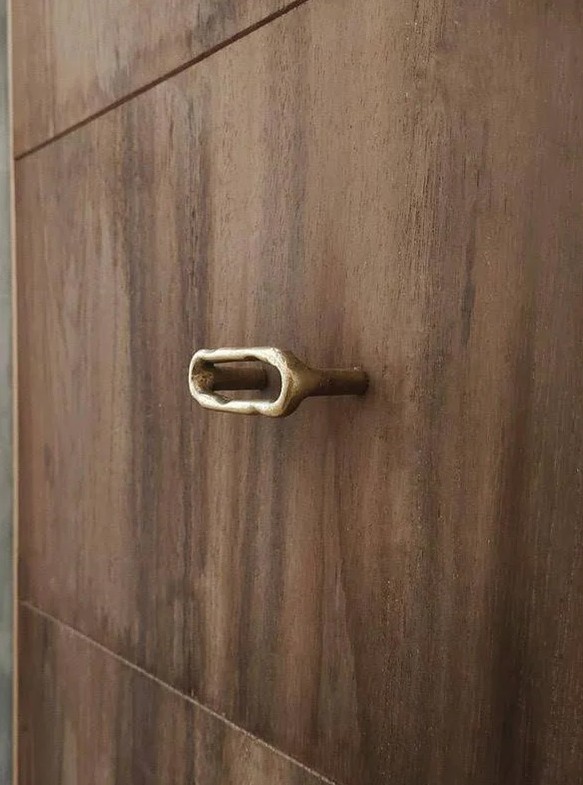
Chapman & Bose specializes in finely cast bronze hardware that feels at once timeless and unexpected. Their collections evoke the patina of age, yet never feel retro. With textures that range from smooth to deeply striated and finishes that glow softly rather than shout, Chapman & Bose pieces work equally well in heritage homes and avant-garde interiors.
PullCast redefines hardware as sculpture. Based in Portugal and rooted in a design culture that values art and craftsmanship, PullCast offers bold, often whimsical pieces that draw inspiration from nature, architecture, and couture fashion. These are not background players — they are focal points, conversation starters, and declarations of design confidence.
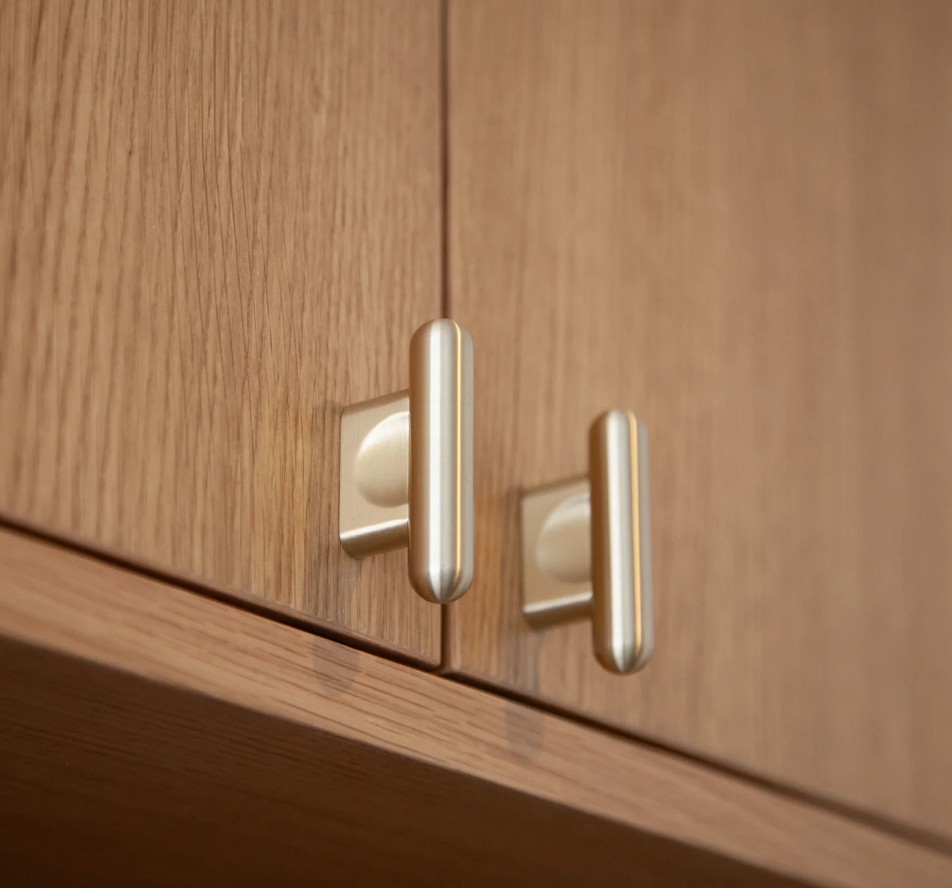
Handmade in England, Ged Kennett’s hardware is minimalist in form but rich in presence. With precision-milled lines and a focus on brushed and polished stainless steel and brass, the pieces carry a quiet sophistication that elevates without overwhelming. It’s a line for the true modernist — where restraint becomes the ultimate luxury.
Encompassing nearly 800 square miles of rolling hills, winding rivers, Medieval castles and storybook villages, the Cotswolds is England’s largest designated Area of Outstanding Natural Beauty (AONB). Stretching across six counties — Gloucestershire, Oxfordshire, North Somerset, Warwickshire, Wiltshire, and Worcestershire — the pastoral region has served as creative inspiration for such literary icons as Jane Austen and J.R.R. Tolkien, not to mention famed British series spanning from Harry Potter to Downton Abbey.
With a name that’s likely an amalgam of the terms for “sheep pen” (cot) and “rolling hills” (wolds), the Cotswolds have long been associated with sheep — specifically the Cotswold Lion breed known for its golden fleece. During the Middle Ages, the area thrived as a producer of high-quality wool and many towns saw the construction or expansion of “wool churches” — Gothic houses of worship funded by wool merchants.
Photo via Cotswolds Distillery.
As recently as 1999, the Cotswolds landscape evolved with the arrival of spectacular lavender fields that now cover 45 acres of farmland. “It is now difficult to remember a time before lavender was central to our farm,” Cotswolds lavender farmer Charlie Byrd admits. “Almost everything we now do revolves around lavender — growing, harvesting, making new products and of course using it ourselves every day.”
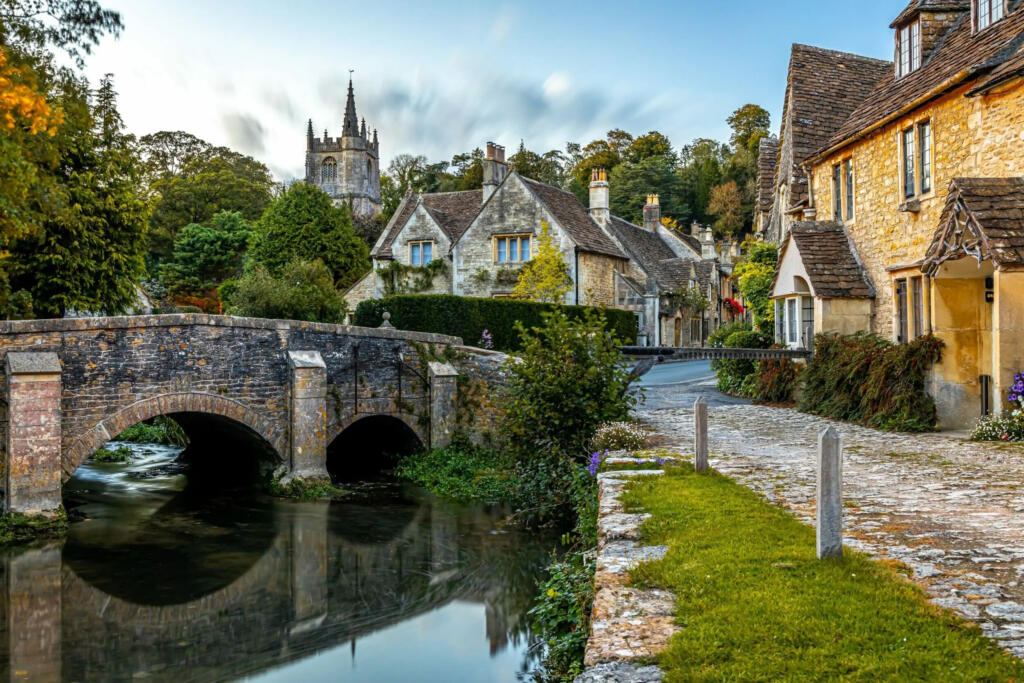
But from an architecture and design perspective, the Cotswolds is easily known best for a distinctive style that began flourishing in the 17th century. Firmly rooted in reverence for tradition, Cotswolds style is synonymous with country homes and cottages built from a honey-colored limestone that’s indigenous to the region. In her blog “A Story of Sheep and Stone,” Wilderness England writer Alex Boag-Wyllie sheds light on its composition and characteristics.
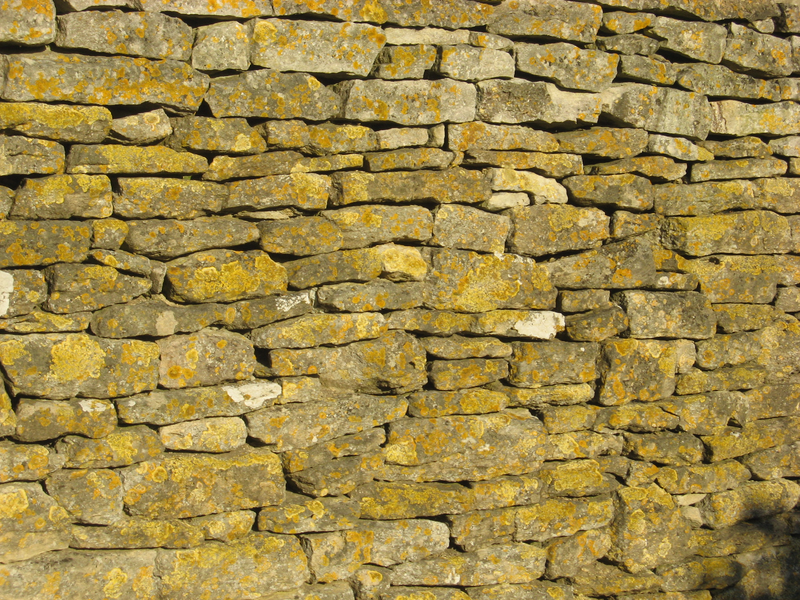
“The stone found in the Cotswolds and beyond in the south of England is yellow oolitic Jurassic limestone. … Limestone is naturally a creamy color, becoming increasingly golden as it weathers, giving Cotswold stone its color. … The Jurassic segment of ‘yellow oolitic Jurassic limestone’ comes from the fact that this stone was formed between 199 and 145 million years ago, during the Jurassic period.”
Intriguingly, the shade of yellow oolitic Jurassic limestone shifts slightly based on geography — from golden hues in the center of the region to creamy whites in the Southern city of Bath. Famously singing its praises, English novelist J.B. Priestly once wrote, “The truth is that it has no color that can be described. Even when the sun is obscured and the light is cold, these walls are still faintly warm and luminous, as if they knew the trick of keeping the lost sunlight of centuries glimmering about them.”
From left: the Cotswolds hamlet of Castle Comb has been described as “the prettiest village in England”; yellow oolitic Jurassic limestone distinguishes some of the Cotswolds’ most famous buildings.
A distinguishing feature of landmarks such as Windsor Castle, Eton College, and the University of Oxford, Cotswold stone essentially inspired the hyperlocal color palette for the entire region. Warm, earthy, and textural, the classic Cotswolds mood board goes beyond honey-colored limestone to include exposed wooden beams, flagstone flooring, open shelving, comfy furnishings, brass and copper accents, and — importantly — a pervasive sense of understated luxury. Unsurprisingly, designers and homeowners often adapt and modernize the hallmarks of traditional Cotswolds style — which shouldn’t be confused with the more whimsical “cottagecore” aesthetic.
Among the design threads connecting Cotswolds-style kitchens is an unfitted plan that hearkens to the pre-industrial era. Prioritizing function over form, early unfitted kitchens were mix-and-match affairs combining unattached appliances, baker’s racks, butcher blocks, and hanging pot racks. Even today, unfitted kitchens often eschew built-in cabinetry in favor of freestanding hutches and sideboards that reflect craftsmanship and individuality.
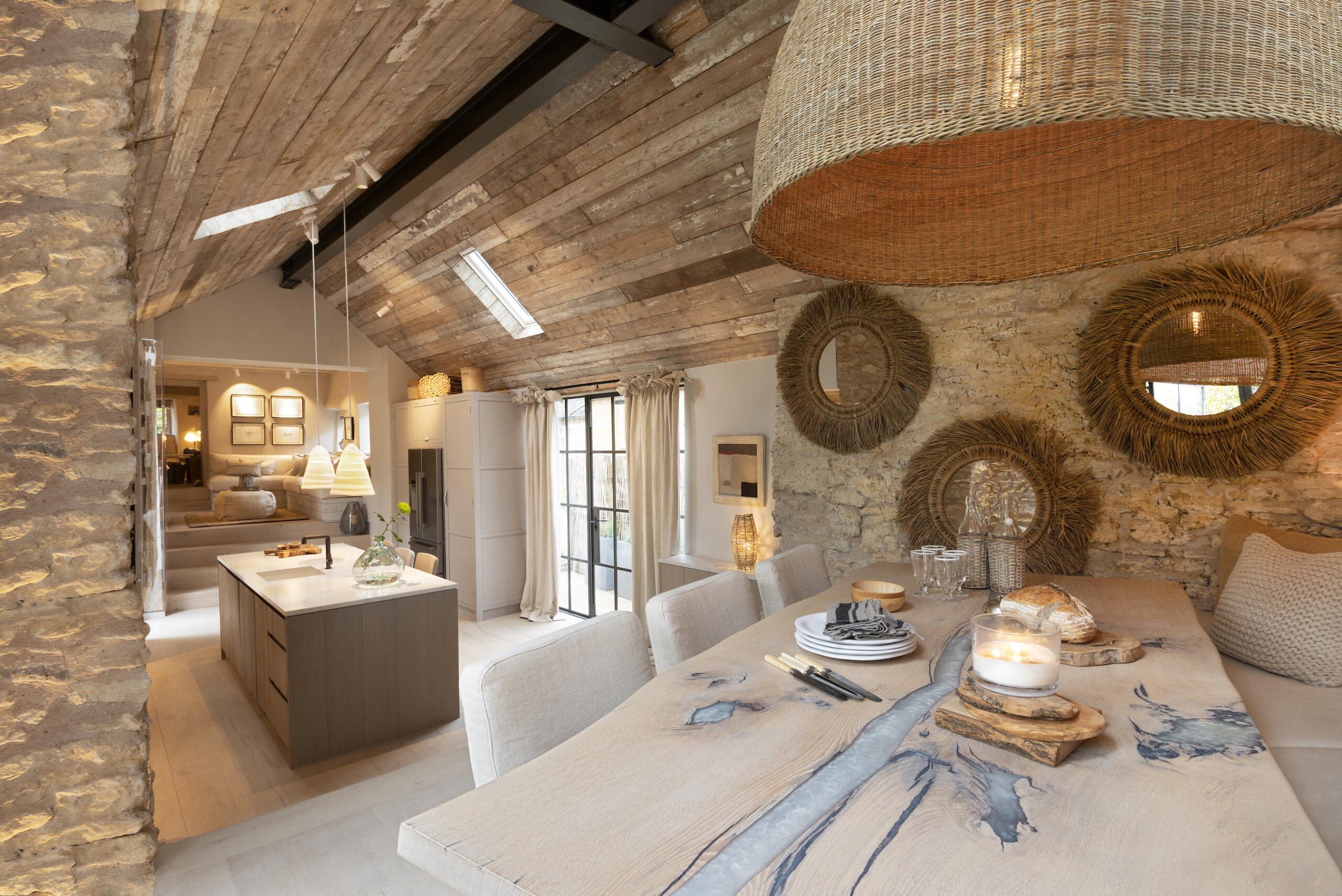
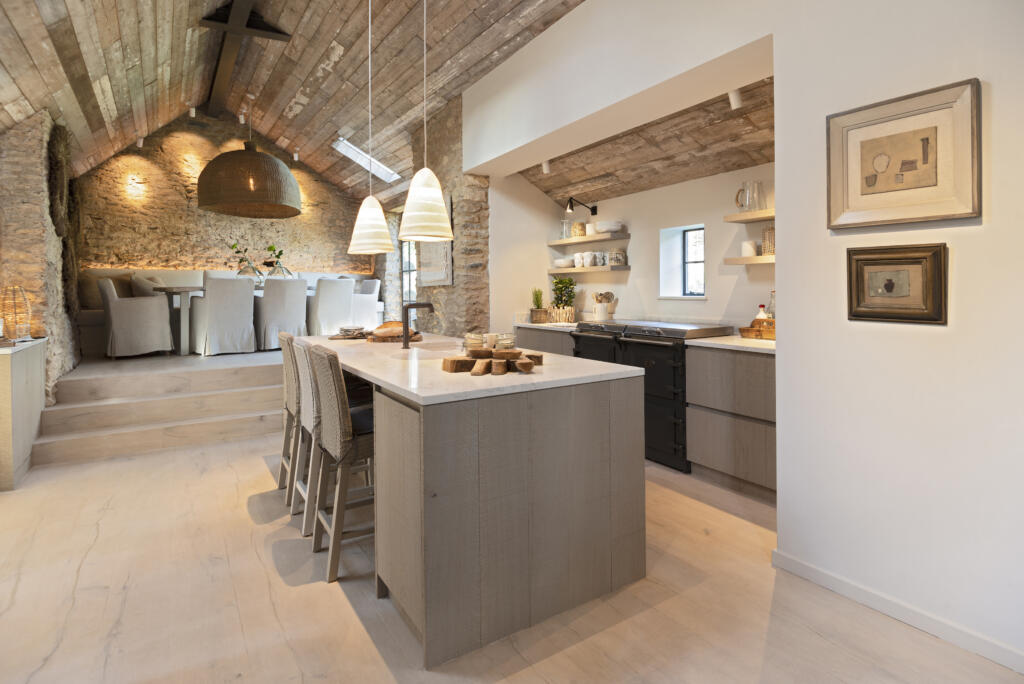
Wood, limestone, and layered lighting add texture and warmth to the open kitchen and dining area in designer Bee Osborn’s BIID Interior Design Award-winning project The Old Post Office.
One shining example, London/Cotswolds-based Osborn Interiors’ project The Old Post Office earned a British Institute of Interior Design (BIID) award in 2022 based on its thoughtful transformation of a stone thatched cottage from the 1540s into a “fully functioning dwelling, eminently suitable for our times.” Tasked with maintaining and highlighting “the historical features, such as the original stone walls, low-beamed ceilings and inglenook fireplaces, while using sympathetic design and materials throughout the renovation,” designer Bee Osborn created richly textured interiors — including an open kitchen and dining area distinguished by reclaimed materials and layered lighting.
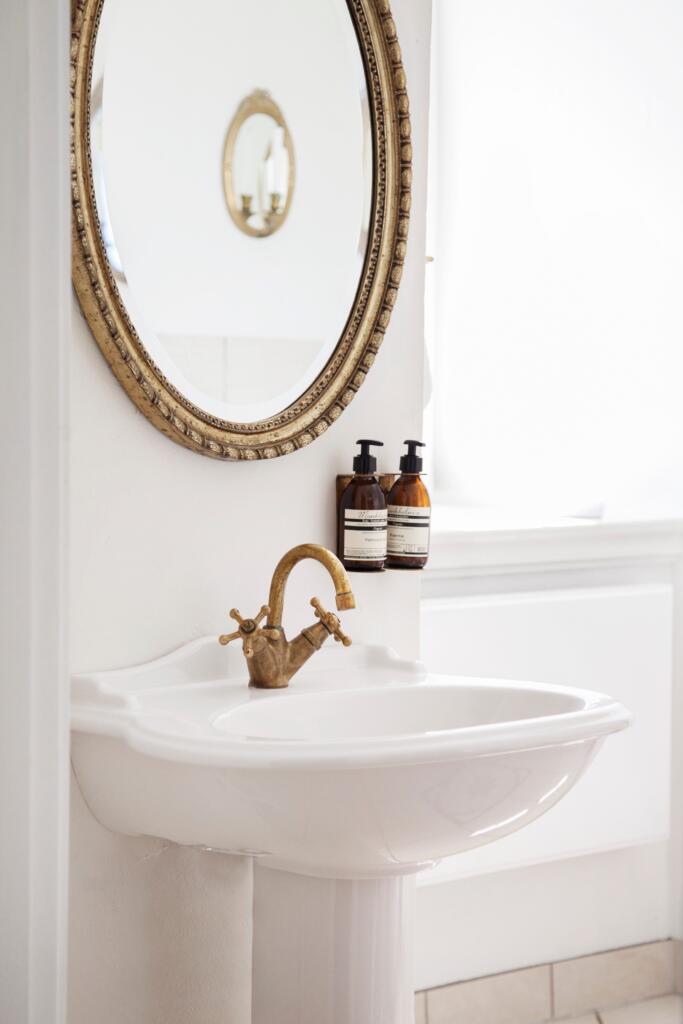
In many Cotswolds kitchens, plumbing fixtures and hardware sway traditional and are often treated with “living” finishes. Long championed by Alexander Marchant, unlacquered brass and other living finishes age gracefully by design. Devoid of a protective sealant, the base metal is exposed to the elements — from the oxygen in the air to the oil on our hands — and begins to deepen in shade and develop a natural patina. Arguably inimitable, the nuances of living finishes exemplify the warm glow of the Cotswolds.
Design by Roseywood Interiors.
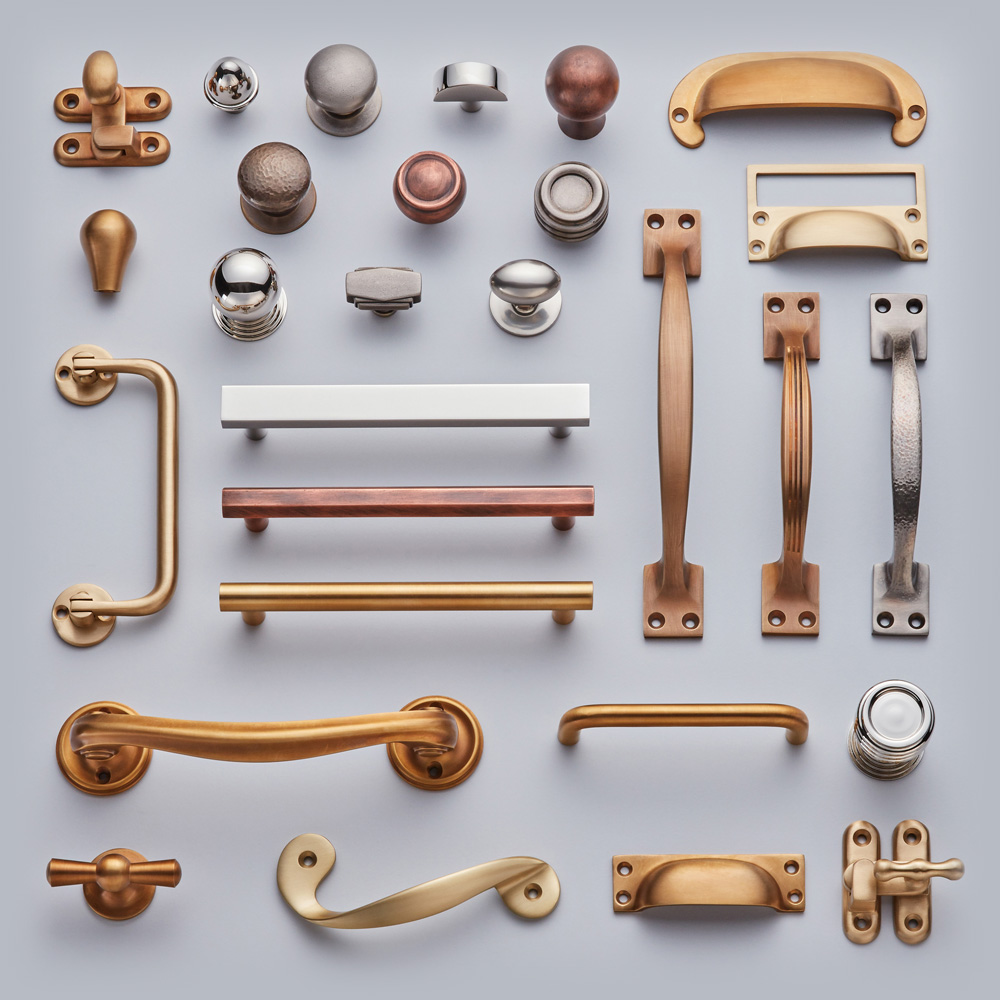
From left: Armac Martin’s Cotswold Collection comprises cup pulls, pot rails, bail handles, and other shapes inspired by the traditional beauty of the English countryside.
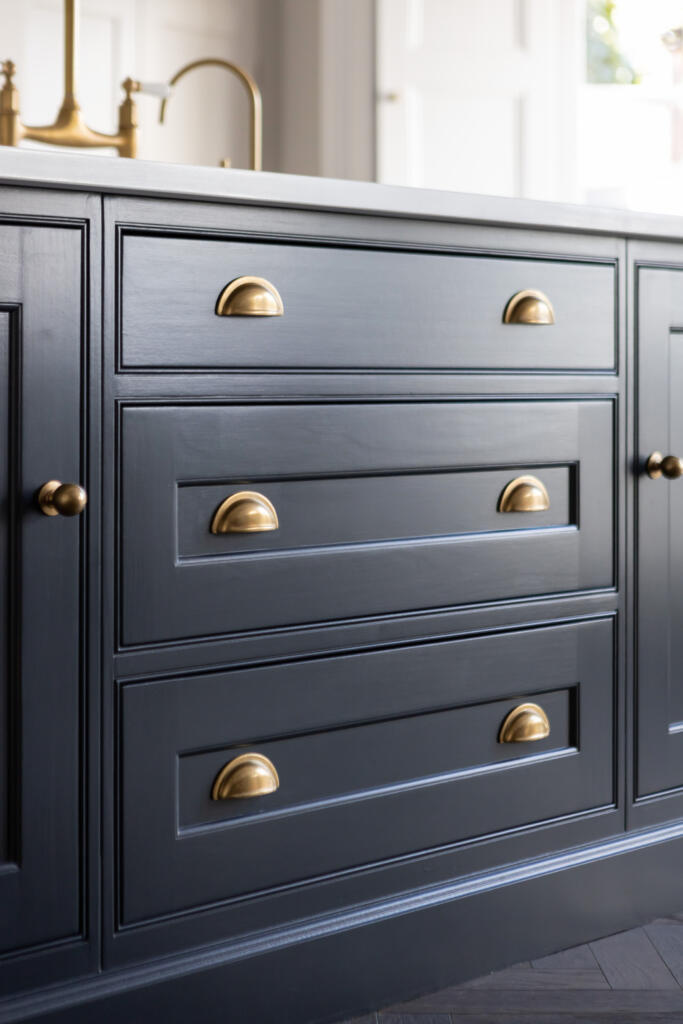
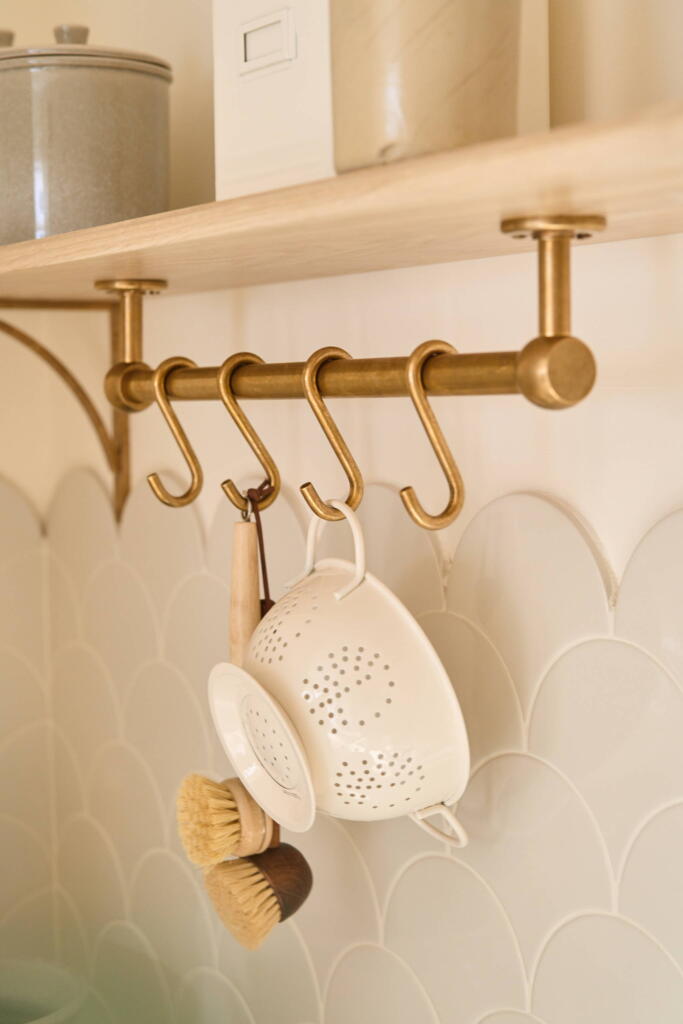
An English mainstay since 1929, Birmingham-based bespoke hardware manufacturer Armac Martin captures this vibe brilliantly with the aptly titled Cotswold Collection. Available in a broad array of finishes — from aged brass to polished nickel — the nine-piece collection is highlighted by cup pulls, bail handles, cupboard latches and homey pot rails with brass “S” hooks.
Similarly masterful with solid-brass luxury hardware, New York-based Classic Brass nails Cotswolds-appropriate styles with traditional collections such as Chautaqua and Hunter — both of which comprise dozens of knob and pull varieties available in 37 finishes.
An iconic American brand known for impeccable quality and design, luxury kitchen and bath authority Waterworks boasts collections that span from classic to transitional to modern. Channeling the spirit of the Cotswolds with the Connecticut-based company’s cabinet hardware might involve anything from the R.W. Atlas latch to a porcelain-topped Etoile knob or cup-style Paragon pull. Befitting any room in the house, the Waterworks Fallbrook collection also echoes the earthy tones and textures of the Cotswolds with classic knobs and pulls wrapped in timeless brown leather.
Design by Jackson and LeRoy. Photo by Joshua Caldwell.
From left: bridge and gooseneck kitchen tap styles from TONI Copenhagen (Christiansborg), Newport Brass (Gavin), and Waterworks (Easton).
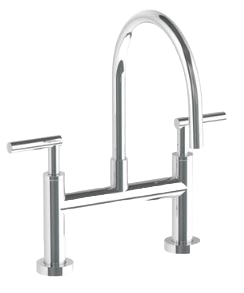
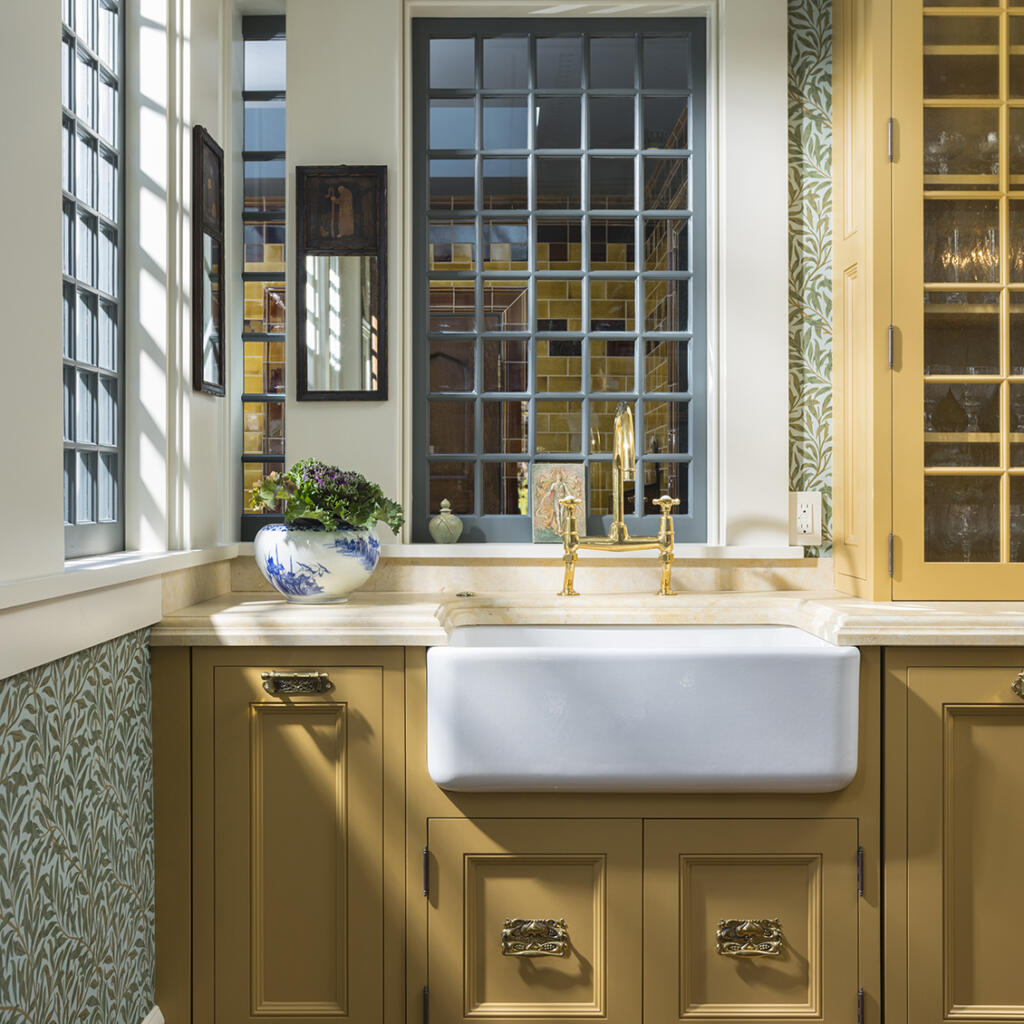
Arguably, one of the most impactful ways to bring the old-world warmth of the Cotswolds into the kitchen is with a traditional faucet — especially bridge and gooseneck styles. Among our many favorites are styles from Waterworks’ Easton, Julia, and Aero collections; TONI Copenhagen’s covetable Christiansborg collection; Waterstone’s vintage-inspired Hampton suite; Newport Brass’ Fairfield, Chesterfield, and East Linear collections; and just about any kitchen tap from longtime London mainstay Barber Wilsons.
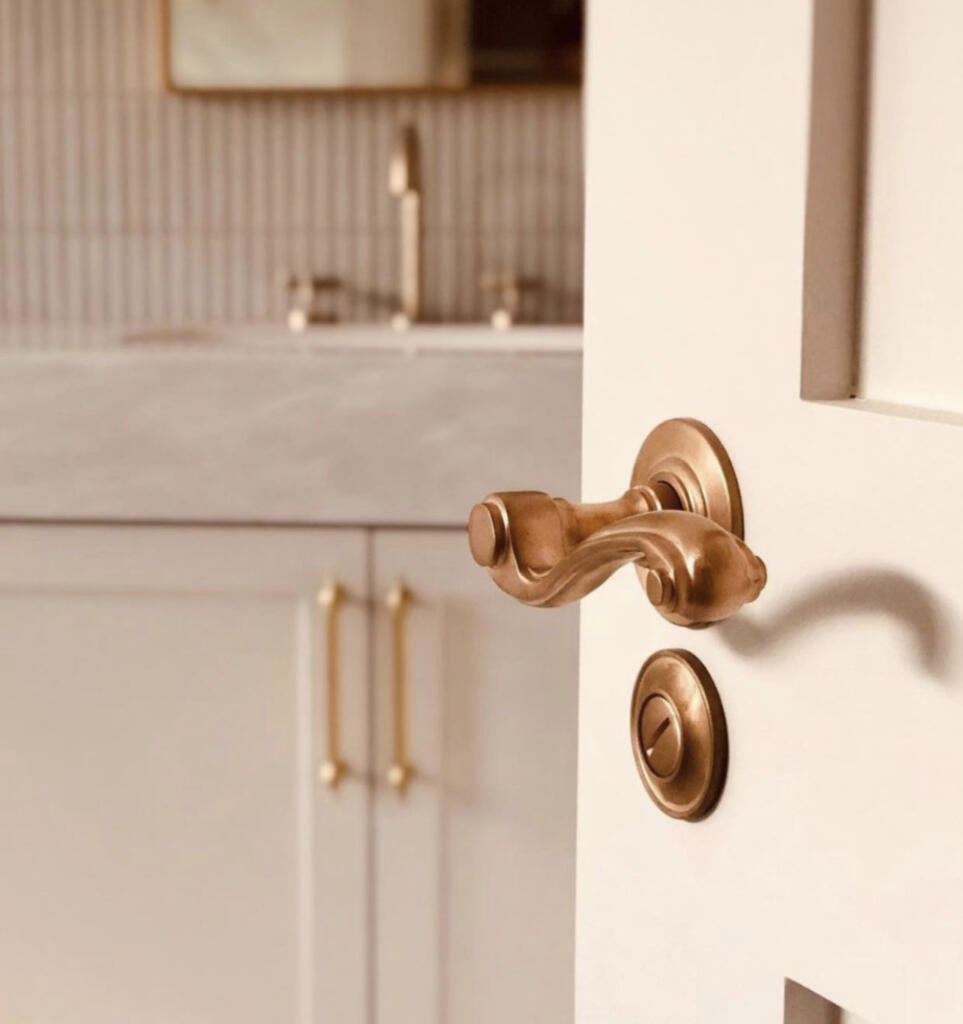
Frank Allart’s Decorative Scroll Lever.
As UK-based designer Jacqueline Dantier explains in a video exploring English country style, “The Cotswold interior design style captures the essence of rural charm and timeless elegance, blending heritage with contemporary comforts in perfect harmony.” In addition to tried-and-true materials such as limestone, exposed wooden beams, and flagstone flooring, Dantier points out that Cotswolds living spaces often feature traditional furniture — think Chesterfield sofas, Windsor chairs, French-style coffee tables, and oversized ottomans — along with a warm and earthy palette of soft neutrals. Emphasizing the warmth of that palette, lighting is frequently layered and takes shape in ceramic table lamps, brass or copper pendants, lamp-shade chandeliers, even candles in glass lanterns.
In keeping with the tone set by traditional hardware and living finishes in the kitchen, door hardware also sways classic. “Makers of fine English hardware since 1914,” Birmingham-based Frank Allart rises to the occasion with a wealth of options available in a wide range of finishes — including multiple shades of unlacquered brass.
Design by Angus Reid Projects. Photo by Genevieve Lutkin.Photo by Marie Louise Munkegaard.
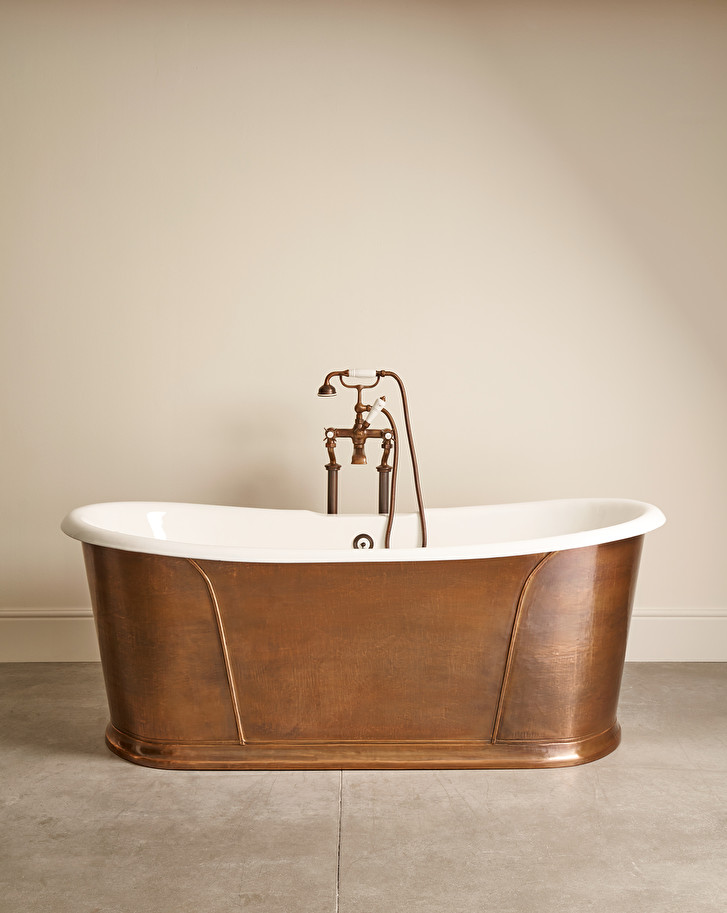
From left: Waterworks’ Empire bathtub and Henry tub filler; Devon&Devon’s cast-iron Ambra tub; TONI Copenhagen’s Christiansborg lavatory tap.
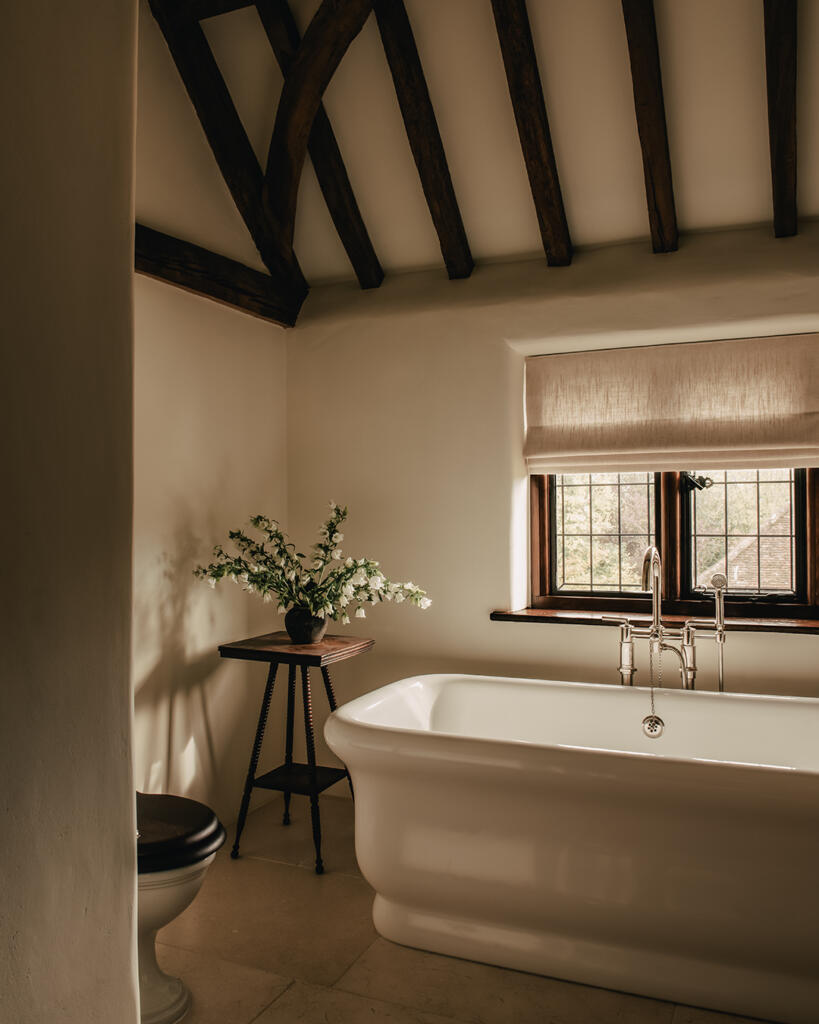
The sense of quiet luxury easily carries over into Cotswolds-style bathrooms, with plumbing fixtures and cabinet hardware typically following time-honored traditions. (A cast-iron or claw-foot bathtub outfitted with a brass tub filler is a great place to start.)
But as British interior designer Pippa Paton deftly illustrates in her book Twenty First Century Cotswolds, English country interiors are increasingly eclectic and appointed with modern comforts and conveniences. “The main theme of this book is the passion to preserve the Cotswolds’ history, architecture, and buildings whilst making them relevant to 21st-century living,” she writes. With that in mind, Cotswolds style can be adopted with reverence or adapted with contemporary sensibilities and creature comforts at play.
Clockwise from top left: Jean-Paul Belmondo and Jean Seberg in Jean-Luc Godard’s 1960 classic Breathless, Haussmann-style apartments, iconic designer Coco Chanel, and the Louvre Pyramid.
Evidenced by everything from the Gothic grandeur of Notre-Dame to the playful spirit of Rococo and the bespoke intricacies of haute couture, French design is a vast arena that simply can’t be placed in a nutshell. Even the effortless chic style of French people elicits the elusive je ne sais quoi. On full display in the films of Nouvelle Vague auteur Jean-Luc Godard, that seemingly innate cool factor extends beyond French people — it’s an attitude, an indefinable vibe that can be applied to art, fashion, decor, almost anything imaginable.
Although there are multitudes in between, a compendium of French design might contrast the ornate, gilded flourishes of the Baroque and Rococo movements of the 1700s with the streamlined, geometric elegance of Art Nouveau and Art Deco in the 1900s. That compendium might also credit controversial urban planner Baron Haussmann with “transforming” Paris into a modern city distinguished by grand boulevards, stately apartment buildings and lush gardens.
Icons of Parisian aesthetics, the buildings Haussmann designed in the mid-19th century were intentionally uniform — all built from cream-colored limestone and topped with mansard roofs — as part of plan to “unify” the evolving City of Lights. But France is also a grand champion of mixing styles and juxtaposing old and new. Beaux-Arts architecture — an 1830s-era mashup that put a modern spin on Neoclassical and Baroque styles — is one famous example. The ultra-modern glass pyramid I. M. Pei plopped amid the classical confines of the Louvre courtyard is another.
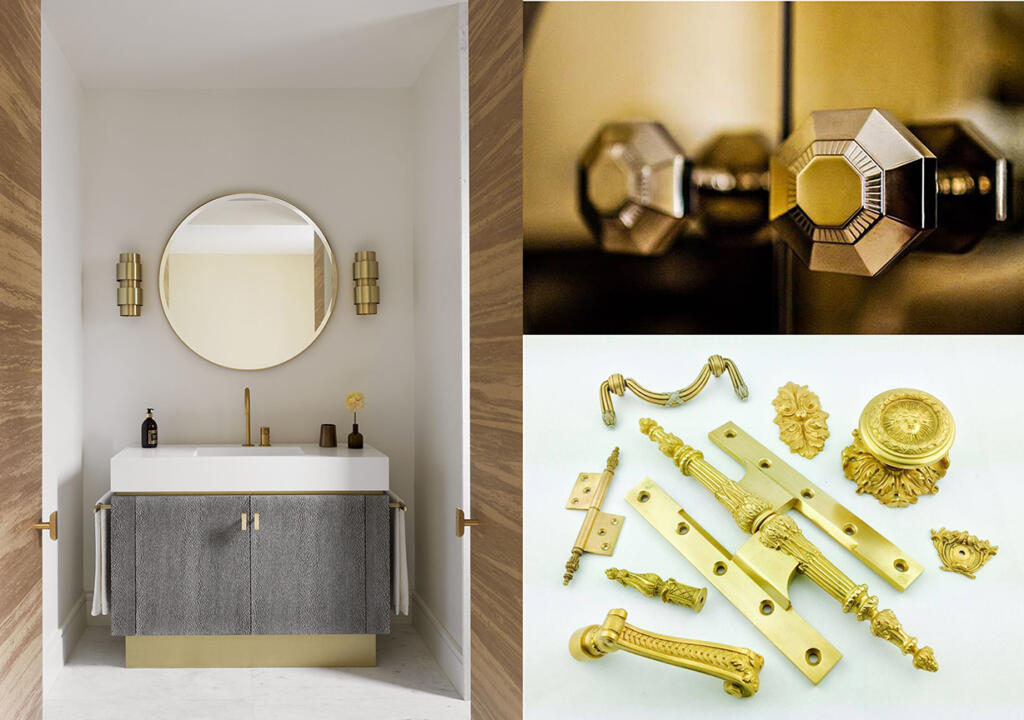
Fittingly, the distinctive French brands represented by Alexander Marchant — Rémy Garnier, Bronzes de France, THG Paris, and the enigmatic niche line Serie Rare — uphold rich and historic traditions while also embracing innovation and stylistic evolution.
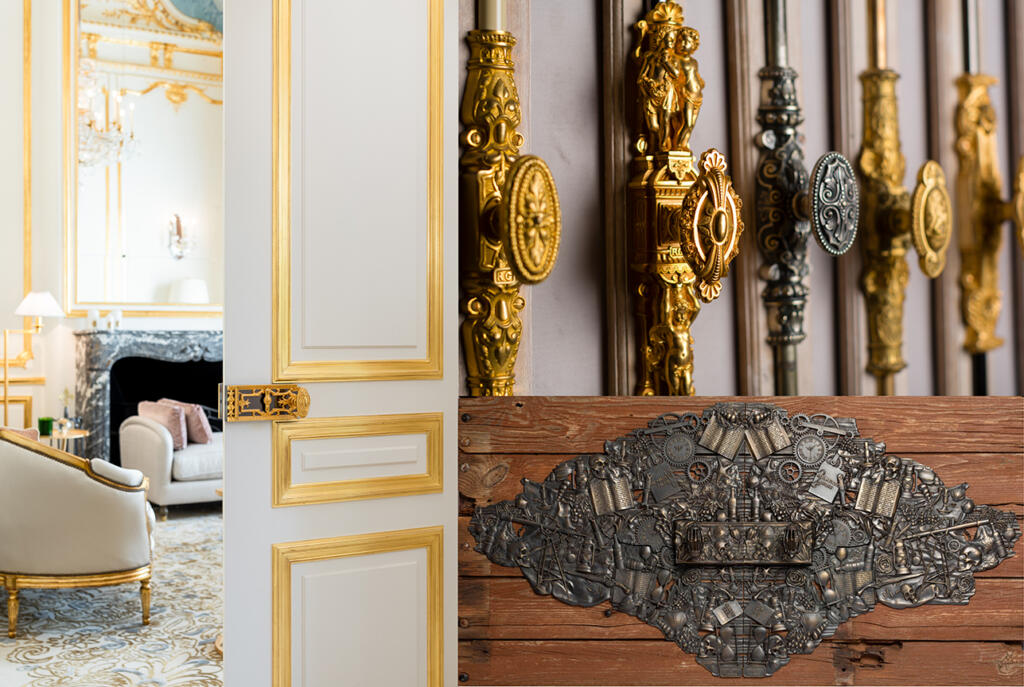
The company behind the cremone bolt, Rémy Garnier is known for both historic preservation and contemporary pieces like the new Vanities lock.
Entrepreneurial metalworker Rémy Garnier established his namesake workshop on Paris’ left bank in 1832, focusing chiefly on locks and door hardware. Credited as the inventor of the cremone bolt — a ubiquitous locking mechanism for windows and doors — Garnier hit an early career milestone when he got tapped to restore the locks of Paris’ city hall after the 1871 Commune Fire. That high-profile project positioned Garnier neatly with Baron Haussmann’s revitalization efforts and the construction of his quintessentially Parisian apartment buildings — which all called for cremone bolts. Nearly two centuries since its inception, Rémy Garnier now boasts a catalog comprising 7,000 unique bronze and brass designs — sleek Art Deco levers and ornate Louis XIV knobs among them. Anchored by an immense Paris workshop on Boulevard de la Bastille and a bronze foundry in Touraine, the company is a go-to for historic preservation projects and has restored locks, cremones and light fixtures at the Louvre, Versailles, the Élysée Palace, the Swiss Embassy and the Paris Opera, among many other landmarks and monuments. As a result, Rémy Garnier has earned the designation of Entreprise du Patrimoine Vivant, which recognizes significant contributions to national heritage through craftsmanship. While the Art Nouveau and Art Deco movements remain touchstones, Rémy Garnier marches onward with forward-thinking offerings that encompass both custom orders and new creations such as Vanities — a monumental lock inspired by biker culture and the fleeting nature of life itself.
Bronzes de France hardware runs the gamut from Art Deco to ornate, historical designs.
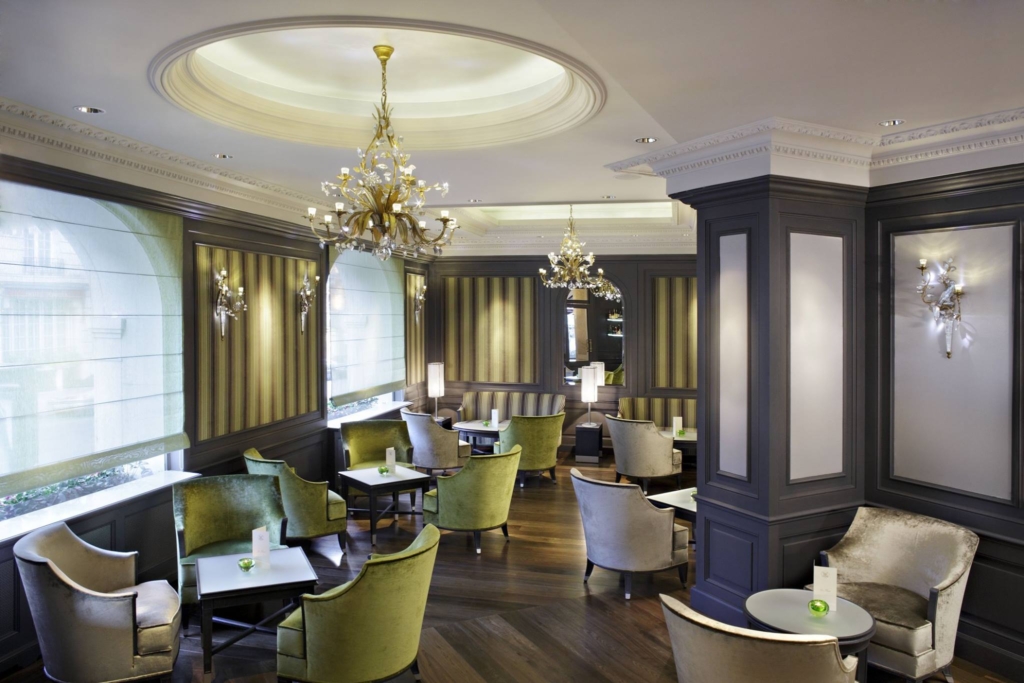
Baguès Paris lighting installed at Hôtel Château Frontenac.
A leader in the realm of artistic bronze hardware since 1852, Bronzes de France holds a vast collection of designs that spans from Louis XVI to Art Nouveau and contemporary styles. A testament to its authenticity and impeccable craftsmanship, the company was authorized by the French government in the 19th century to preserve and reproduce historic door and cabinet hardware installed in the chateaus and palaces of the former Kingdom of France. Today, those wide-ranging styles comprise Bronzes de France’s encyclopedic collection La Quincaillerie Centrale. Fittingly, these exquisite bronze pieces are created using hand-chasing techniques typically used for fine jewelry. But historic refinery is but one aspect of Bronzes de France, which employs cutting-edge technology in the creation of new designs and custom pieces in a busy atelier in Normandy. Perhaps unsurprisingly, the company’s work can be found in some of the most luxurious hotels in Paris, including the Crillon, Le Meurice, and Georges V. Elegantly illuminating the offerings of Bronzes de France, its sister company Baguès Paris designs and manufactures a wide assortment of bronze light fixtures. Arguably known best for their show-stopping crystal chandeliers, Baguès also designs and manufactures sconces, lamps and mirrors that run the gamut from traditional to modern and even whimsical. The revered French siblings are also among the select companies who have earned Entreprise du Patrimoine Vivant status.
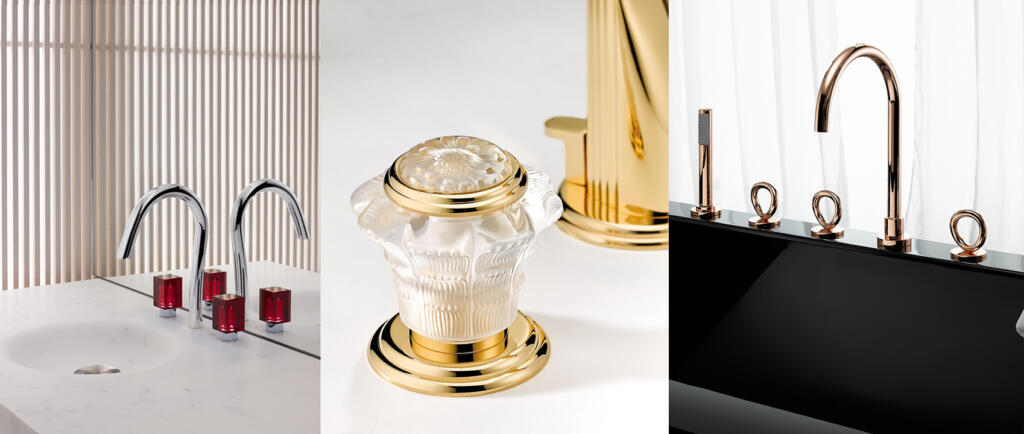
From left: THG Paris takes bathroom fittings to new heights with Beyond Crystal, Hirondelles (a collaboration with Lalique) and O Collection.
Although it’s the youngest in the bunch, THG Paris quickly captured the attention of the design world by taking bathroom fittings and accessories to unexpected new heights. Founded in 1956 by the trio of André Tétard, Julien Haudiquez and Alexandre Grisoni, THG prides itself on “exceptional pieces” that incorporate crystal, marble, porcelain, onyx, optical glass and semi-precious stones. Thanks in part to collaborations with buzz-worthy designers and iconic brands, the company’s collections are refreshingly diverse. Among the many shining examples, Beyond Crystal (designed by Rémi Tessier in collaboration with Baccarat), Dahlia (a Lalique collaboration based on a poetic design from 1931) and Nihal (designed by Xavier Cartron in collaboration with the French Limoges porcelain factory Haviland) are some of the most individualistic bathroom taps one could dream up. Likened to the “haute couture of bathroom fittings,” THG goes far beyond splashy taps to offer showers, basins, bidet mixers, tubs and whirlpools along with sleek kitchen fixtures. An environmentally conscious operation that handles every step of the manufacturing process (“from design and machining through to the foundry”), THG is also a member of the elite Entreprise du Patrimoine Vivant family.
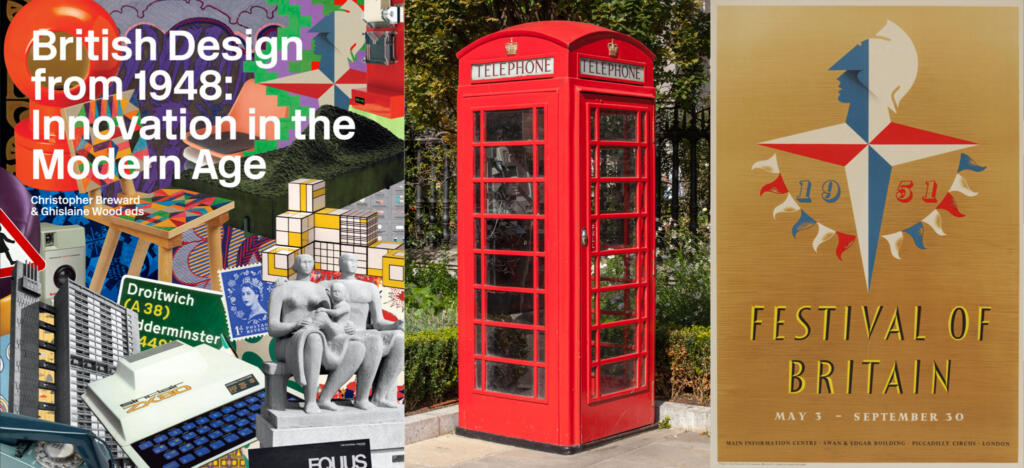
From left: the catalog for the V & A’s “British Design” exhibition, the iconic K6 telephone box, and the 1951 Festival of Britain poster. Anarchy in the UK T-shirt by Vivienne Westwood & Malcolm McLaren, 1977-8, worn and altered by Johnny Rotten.
Nine years ago, London’s Victoria & Albert Museum opened “British Design 1948-2012: Innovation in the Modern Age” — an exhibition comprising more than 300 objects exploring three key themes: the tension between tradition and modernity; the subversive impulse in British culture; and Britain’s leadership in design innovation and creativity.
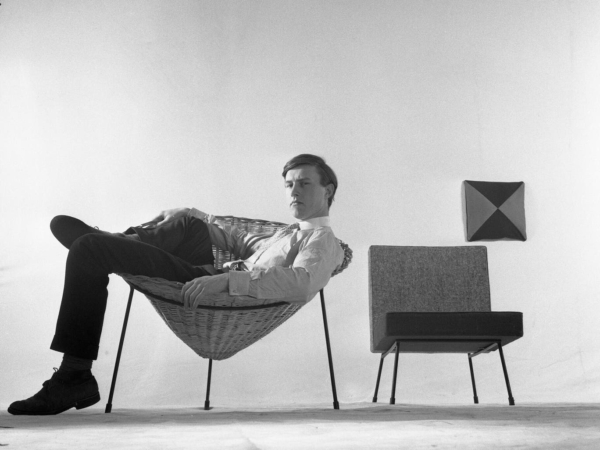
Sir Terrence Conrad photographed in his Cone Chair by Ray William.
In a promotional video for the exhibition, Edward Barber (of the London-based industrial design studio Barber Osgerby) made a compelling point: “It doesn’t matter where you go in the world, you’ll find a British designer working there, whether it’s in architecture, industrial design, fashion design or graphics, we are everywhere.” Hailed by the museum as “one of the most exciting creative practitioners working in the UK today,” London Design Medal winner Thomas Heatherwick echoed Barber’s sentiments: “When I think of British design, I find that somehow one is talking about people from all over the world who have chosen Britain to base themselves. A lot of modern history has been rooted in what has come from the United Kingdom.”
Undoubtedly due to this global network of British designers, their wide-ranging influences and the diversity of the UK, it’s futile to try to categorize or summarize British design. It can be regal or rebellious, minimalist or maximalist, eccentric or restrained. Ungovernable stylistic inclinations aside, Brits are also behind numerous innovations and inventions, including the tin can, the chocolate bar, the toothbrush, the thermos, the kaleidoscope, the bagless vacuum cleaner and the ATM — not to mention the popularization of the miniskirt (courtesy of swinging ’60s designer Mary Quant) and punk culture (thanks to the Sex Pistols, Vivienne Westwood, Malcolm McLaren, et al.). On the home furnishings front, Sir Terrence Conran is credited with “revolutionizing retail and decor” in the 1960s with Habitat — a London-born chain that brought modern design to the masses and introduced a build-it-yourself format later adopted by IKEA.
Fittingly, the British brands represented by Alexander Marchant champion myriad styles and points of view. Some uphold age-old traditions, others buck tradition altogether — but all maintain a razor-sharp focus on quality, craftsmanship and innovation.
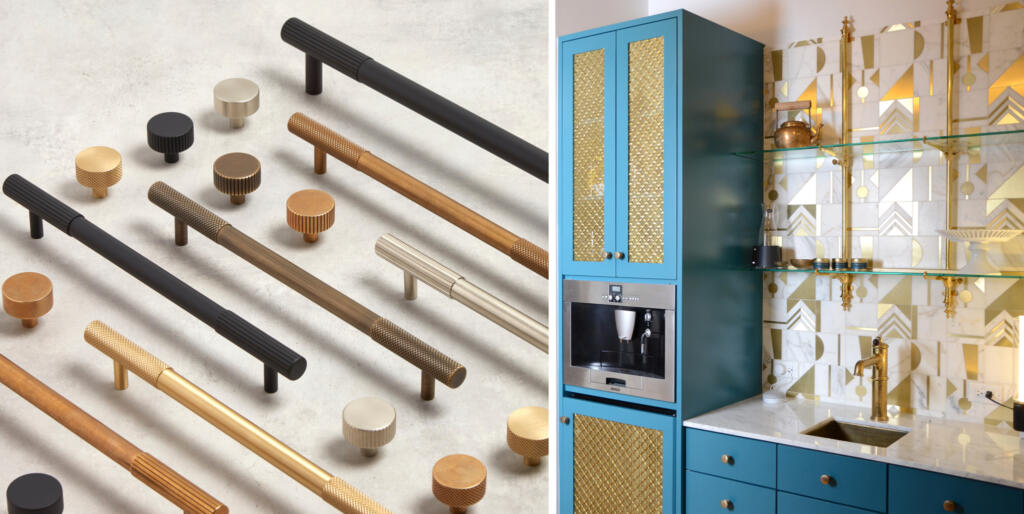
From left: Armac Martin’s MIX collection, and decorative grilles installed in cabinets in our Brentwood showroom in Austin.
Launched by brass founder Harold McGrail in 1929, Armac Martin celebrates the timeless elegance of brass and takes heritage and craftsmanship seriously. Based in Birmingham, the fourth-generation family business offers more than 30 distinct collections of cabinet hardware that run the gamut from industrial (the customizable MIX series is beloved for its tactile, diamond-knurled knobs and pulls) to ornate (Aberdovey takes stylistic cues from seashells). Adding geometric flair to cabinets, doors, vents, panels and more, Armac Martin’s decorative brass grilles are an undeniable fan favorite that are assembled by hand and available in nine unique finishes.
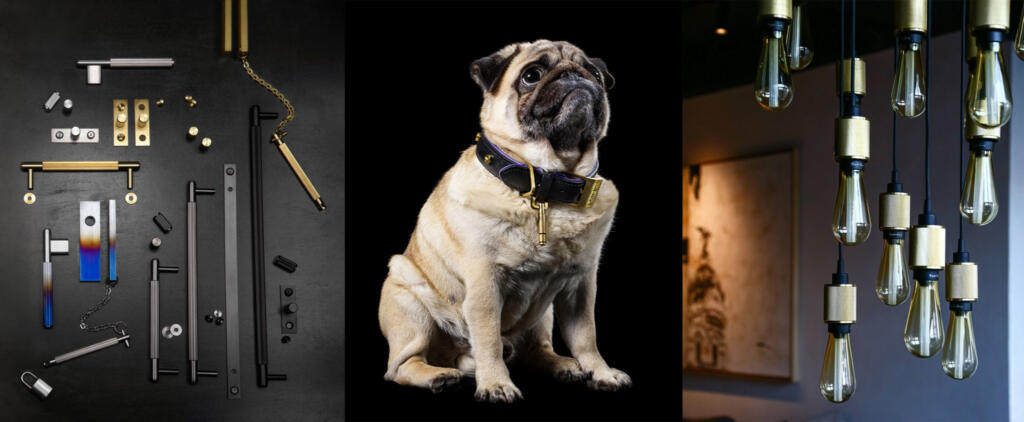
From left: Buster + Punch hardware, a dog collar with solid brass detailing, and “Heavy Metal” brass pendant lights.
The brainchild of architect and industrial designer Massimo Buster Minale, Buster + Punch boasts unusual roots in a motorcycle garage in East London. Drawing inspiration from “London’s fashion, music and sub-culture scenes,” the company strives to “transform everyday functional fittings into extraordinary home details” and succeeds with flying colors. In addition to solid-metal door and cabinet hardware (the multicolored “burnt steel” finish is truly something to behold), the edgy lifestyle brand creates industrial-chic pendant lights outfitted with covetable bulbs, diamond-knurled brass candle holders, dog collars, jewelry, metal coffee tables and home bars fit for a rockstar.
Croft cabinet knobs, pulls and catches in an assortment of finishes.
Croft
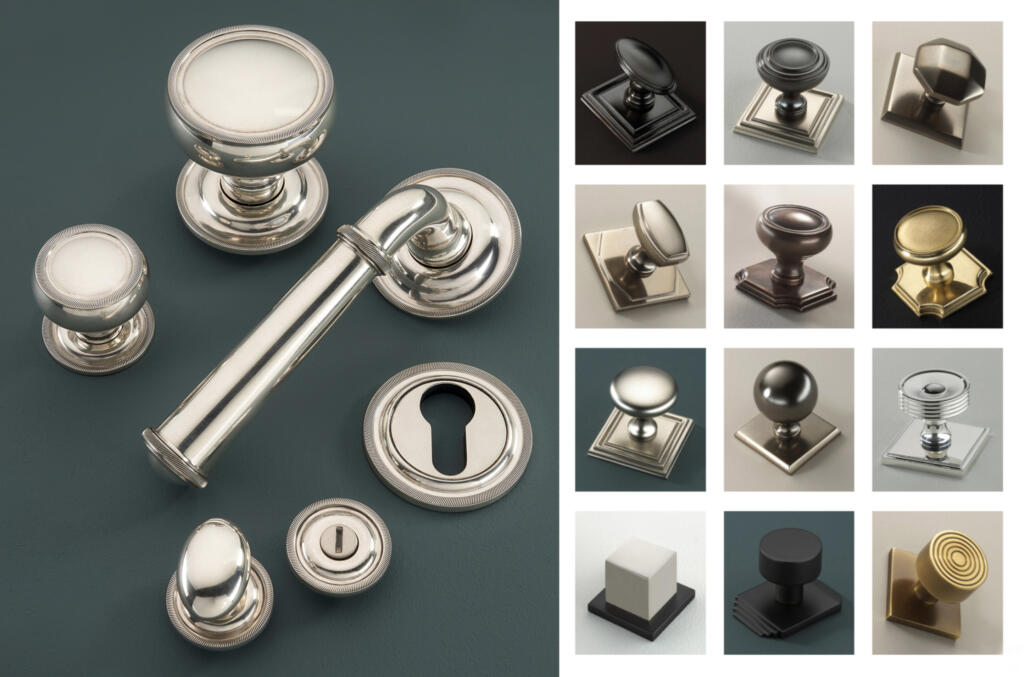
Built by five generations of a family with 150 years of manufacturing history between them, West Midlands-based manufacturer Croft isn’t afraid to use the word “perfection.” In fact, it’s what they call their “default standard.” Since opening its modern chapter in 1972, the company has earned a reputation for impeccable brass and bronze door, cabinet and window hardware as well as bespoke furnishings for royal palaces, historic castles, stately museums and luxury hotels. Encompassing an array of styles (from Art Deco to contemporary), Croft fittings can be personalized in an assortment of signature finishes and patinas including matte black bronze, marbled brass, pearl nickel and polished chrome.
From left: Frank Allart’s new Rope Knurl hardware range, and an array of cabinet knob and plate combinations.
Established by George Allart in 1914, Frank Allart (exclusive to Alexander Marchant in Central Texas) made a name for itself in WWI-era Birmingham by manufacturing brass fittings for the architectural, marine and railway trades. Proud inventor of the 5640 flush bolt that’s still in heavy rotation in the door hardware industry, Frank Allart now designs and manufactures a comprehensive selection of residential hardware (including more than 100 door lever and knob designs) available in 30 metal finishes and patinas. Last year, the century-old company introduced Allart Precision, a new range of door, cabinet and window hardware distinguished by engineered knurled patterns and precision cuts.
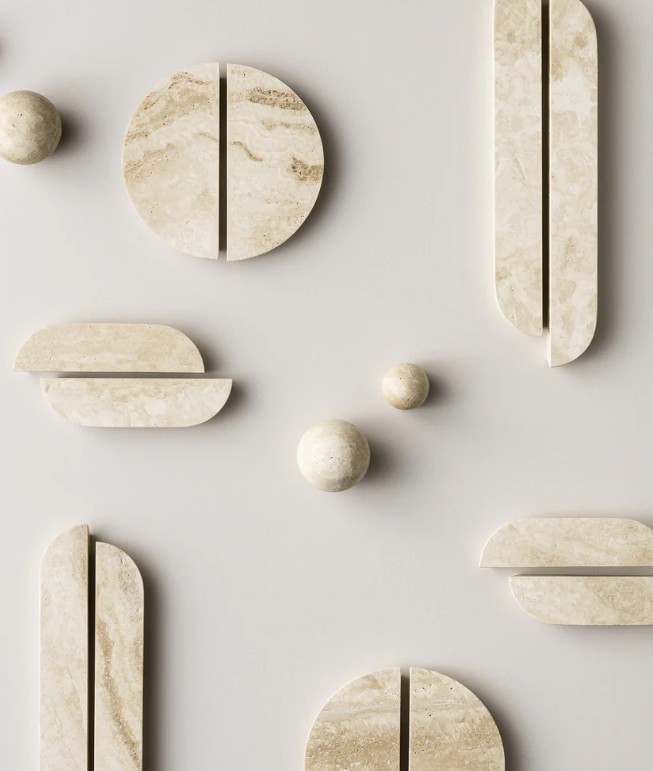
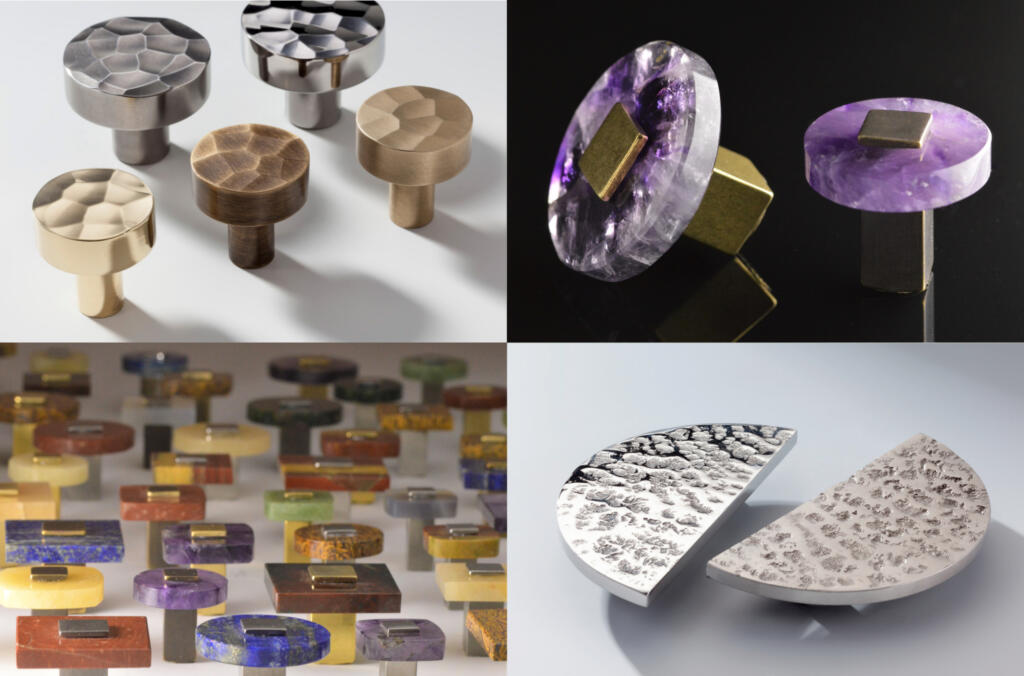
Examples of Ged Kennett’s Handmade and Precious Hardstone collections, including round knobs, amethyst pulls, and semicircle handles.
Based on a quaint, country estate in Southwest England, craftsman Ged Kennett got his start in hand-forged ironwork for residential projects but found his calling in the realm of bespoke cabinet hardware. Formed in 1997, his niche operation is filled with “beautiful old machinery” and proprietary tools used to create stainless steel and brass handles adorned with distinctive textures. Inspired by a trip to India and produced in collaboration with Jodhpur-based designer Gajendra Shanane, Ged Kennet’s Precious Hardstone Collection places amethyst, banded jasper, bloodstone, fossilized agate, green aventurine, lapis lazuli and other semi-precious stones in an exquisite yet functional context likened to “jewelry for furniture.”
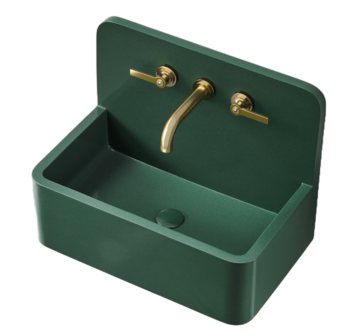
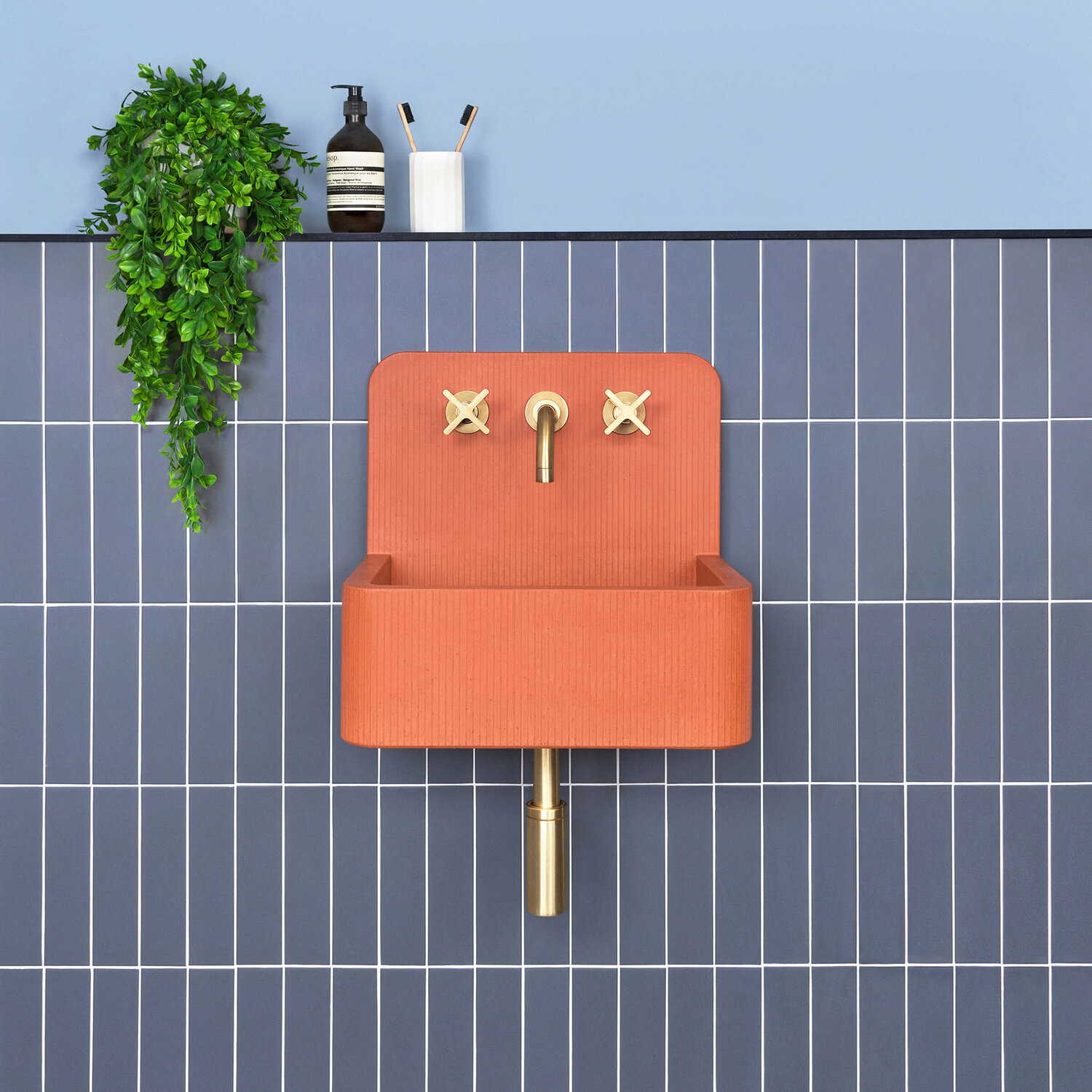
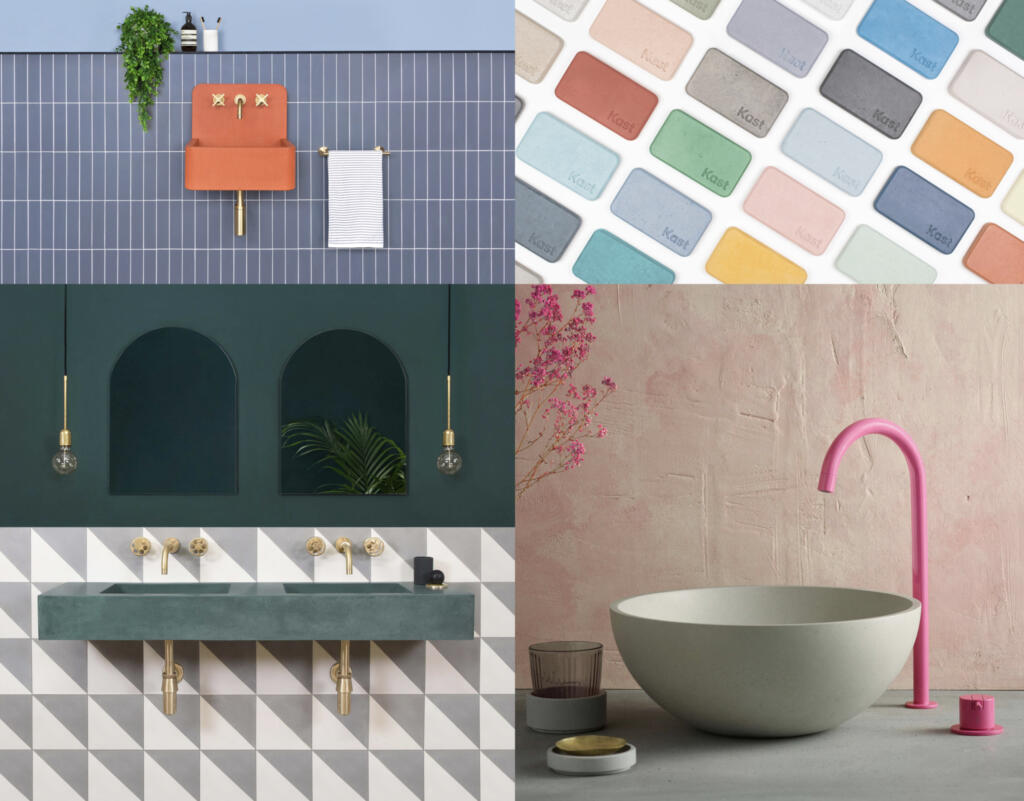
Clockwise from top left: Kast’s compact Elm Mini in Ember, the Kast color range, Rena basin in Ivory, and Sienna double basin in Forest.
You might not know how desperately you need a colorful concrete washbasin until you get familiar with Kast, the design-forward outfit Swiss designer Tim Bayes formed in 2013. Situated on the edge of Sherwood Forest of Robin Hood fame, the company admittedly focuses “relentlessly on one thing” — crafting concrete sinks in a rich and earthy rainbow of 28 colors (storm, mint, peach, brick, golden and duck egg among them). While concrete (or “liquid stone”) is the sole medium of choice, Kast’s shapes, sizes and styles encompass everything from the compact Nilo to the twin Flor Double and the texturally patterned options of the Kast Canvas Collection.
From left: a grouping of seven Original BTC Fin pendants made from bone china, Titan pendants in putty grey, and Pillar wall lights.
Hailed as “one of the first designers to capture the appeal of industrial styling,” Peter Bowles founded Oxfordshire-based Original BTC in 1990 with a goal to produce “lights that you are instantly at home with.” In addition to running six factories — including facilities for ceramics, glass and metal — the family-run company serves as an umbrella over the Davey Lighting and Beadlight brands. While industrial sensibilities are a common thread (the aluminum Titan pendants are to die for), some Original BTC designs skew elegant and even delicate — especially those rendered in translucent bone china (a signature material). Another hallmark described as “one of Original BTC’s best-loved design features” is the use of braided cotton flex in lieu of unsightly plastic cords.
From left: three fixtures from Samuel Heath’s One Hundred Collection, and their Landmark Industrial tap at the 2019 WestEdge Design Fair.
With an astounding 200-year history, Samuel Heath (exclusive to Alexander Marchant in Central Texas) is both an authority and a pioneer in the realm of British design. Established as a traditional Birmingham brass founder in 1920, the company initially produced bed frames, fireplace accessories and giftware but is now known for bathroom fixtures and architectural hardware that deliver “perfect function and beautiful form.” Complementing collections that take design cues from Art Deco, industrialism, “Nordic chic,” the Bauhaus movement, “quintessentially English” neoclassical styles and plenty in between, Samuel Heath’s distinct One Hundred Collection showcases the company’s rich heritage with taps, showers, tub fillers and accessories distinguished by mirror-polished black levers, knurled escutcheon detailing and even translucent crystal glass.
From left: Turnstyle’s Button Stitched Loop Strap handles, custom leather and brass Scroll T Bars, and Shagreen Recess Amalfine door pulls.
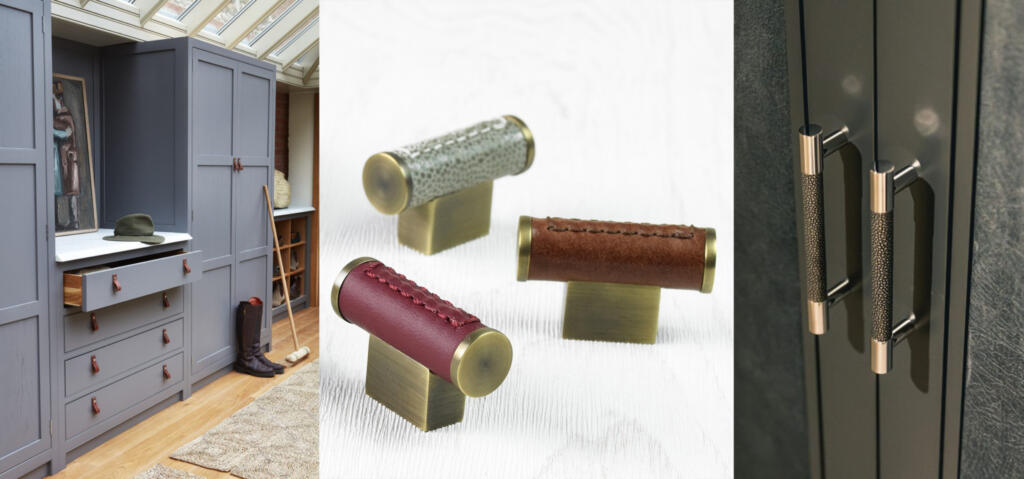
Formed by Steven Roberts and based in “glorious North Devon,” Turnstyle Designs arrived on the scene in 1992 with the amusing slogan “Bored of Brass.” Over the course of nearly three decades, the company has proven its nonconformist point of view by creating innovative door and cabinet hardware from perspex, concrete, hand-stitched leather, dyed marble and the proprietary composite Alupewt. Awarded the prestigious Queen’s Award for Enterprise in 2018, Turnstyle offers more than a dozen unique collections ranging from the geometric Labyrinth (a collaboration with London-based Winch Design) to the organically inspired Bamboo.