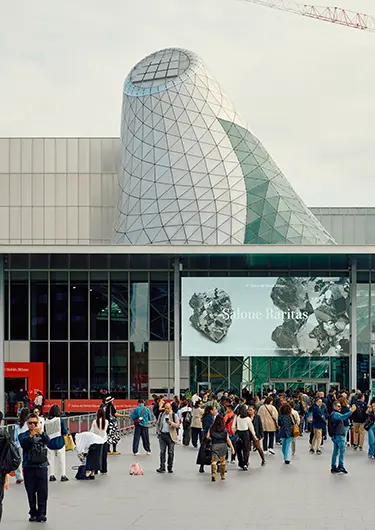
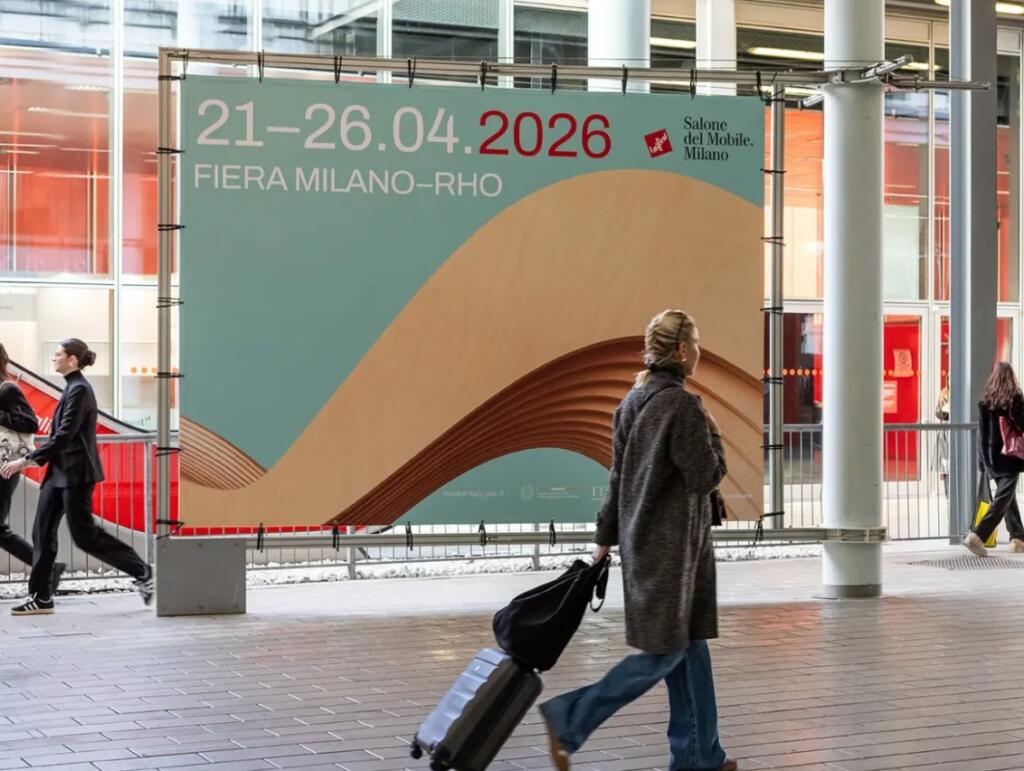
There’s always a moment at Salone del Mobile when you realize the industry has quietly shifted. Not in a loud, trend-driven way, but in a way that feels inevitable. This year, walking through Milan, that shift is clear: plumbing is becoming more tactile, more tailored, and more refined than we’ve ever seen before.
The Rise of Softness: Fabric & Leather Enter the Conversation
For years, we’ve watched the industry explore texture through metal knurling, fluting, machining. It added depth, grip, and visual interest. But what’s happening now goes a step further.
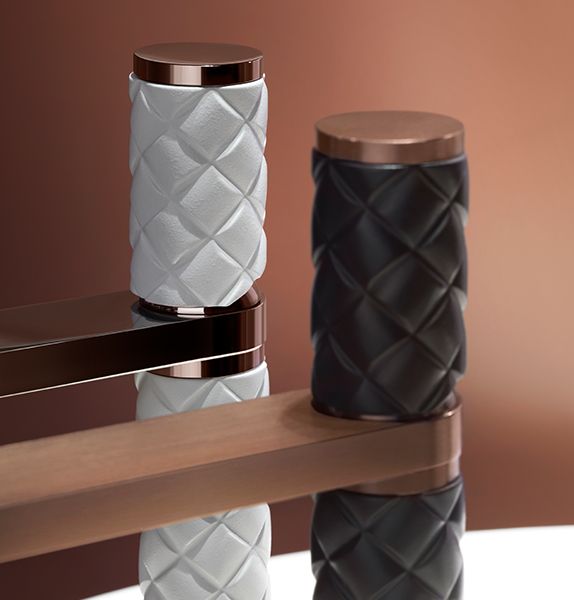
At Gessi, particularly within their Pelle collection, Alexander Marchant is seeing something especially interesting: metal surfaces engineered to look and feel like leather. It’s not actual leather, it’s a highly refined material expression achieved through metal, designed to deliver the warmth, softness, and visual depth of leather while maintaining the durability and performance required of plumbing fixtures.
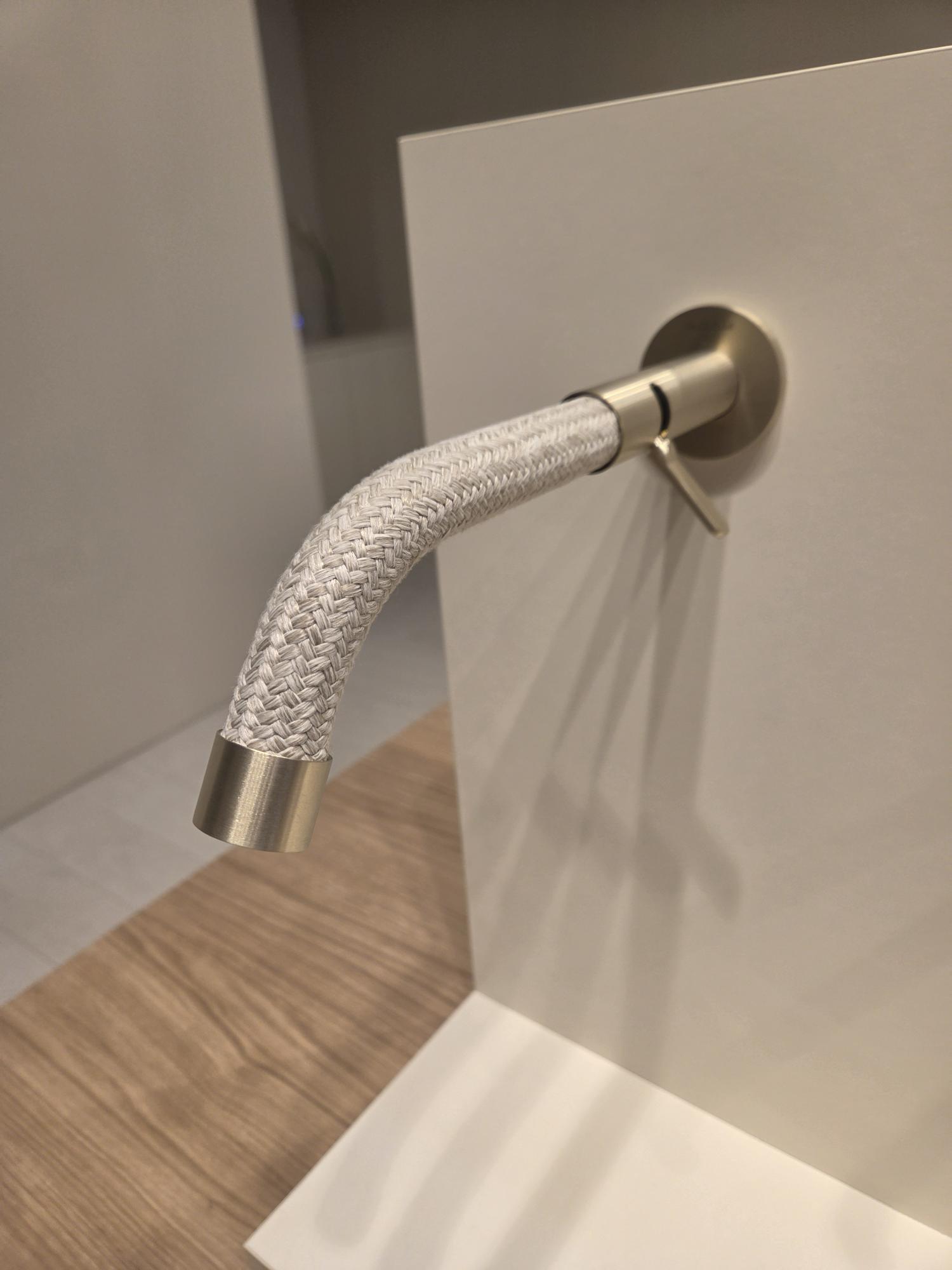
And then, pushing even further into material exploration, Guglielmi is introducing fabric-sleeved faucets using woven outdoor-grade textiles. These are interior fixtures, but the use of outdoor fabric introduces durability into a softer, more tactile application. It creates a layered look that feels tailored, unexpected, and incredibly refined.
It changes everything.
There’s a softness to it. A warmth. It invites touch in a completely different way than metal ever could. Whether it’s the illusion of leather through precision metalwork or the introduction of woven fabric, plumbing is beginning to feel layered, tactile, and almost couture.
This is no longer about industrial precision alone. It’s about sensory experience.
A Return to Restraint: Smaller Scale, Greater Elegance
Another clear shift: proportion is tightening.
We’re moving away from oversized, statement-heavy fixtures toward more refined, smaller-scale forms. The elegance comes from restraint, not volume.
Alexander Marchant sees spouts are slimmer. Handles are more delicate. Profiles feel intentional rather than expressive for the sake of it. A strong example of this direction is the Flora collection by Fantini, which leans into a simplified language, clean, elegant, and highly versatile. It’s not trying to be the focal point; it’s designed to integrate seamlessly across a range of environments while still elevating the overall space.
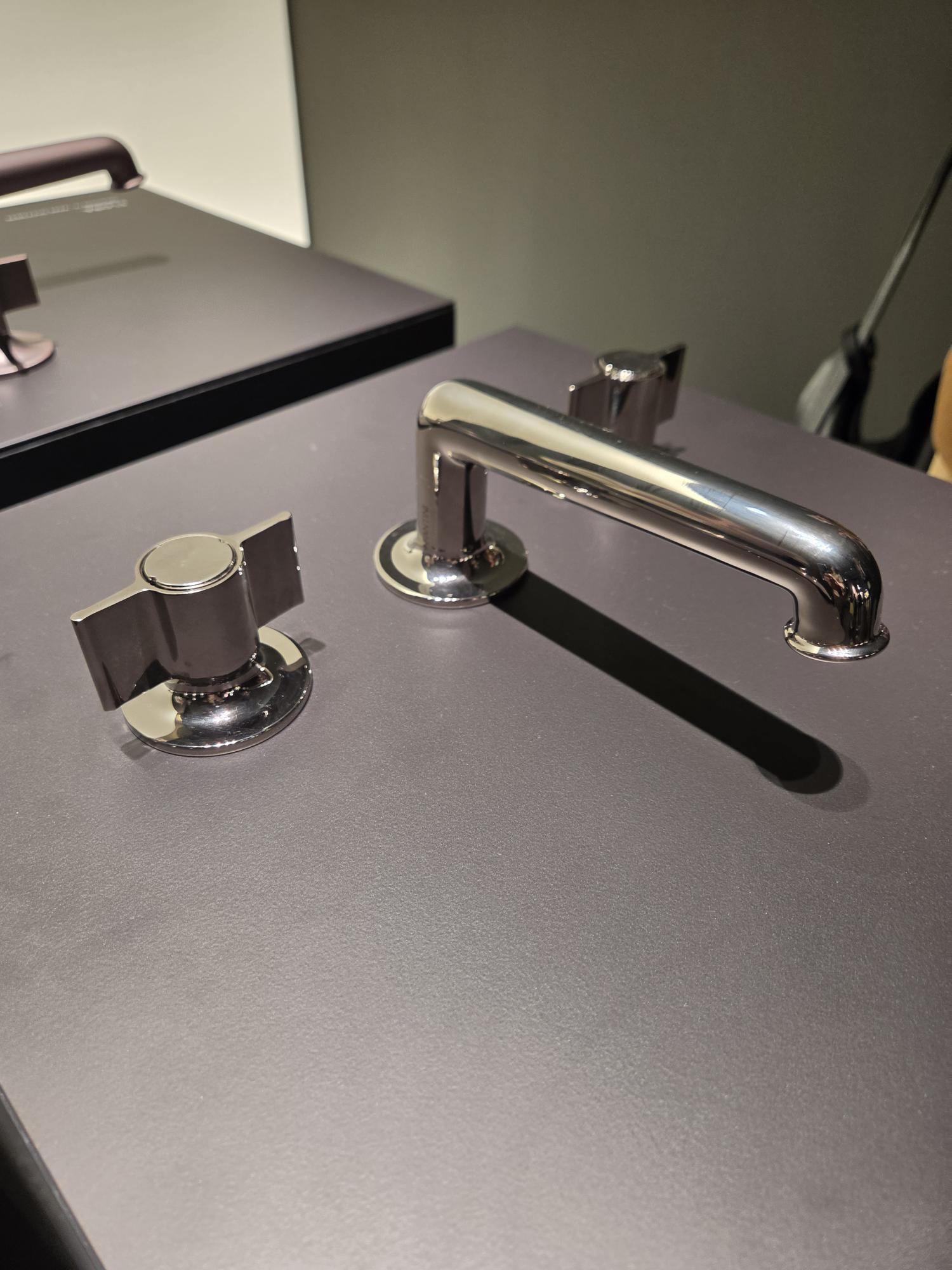
It’s a quiet luxury move. One that aligns with what we’re seeing across architecture and interiors: less visual noise, more precision.
And in many ways, this evolution makes spaces feel more expensive, not less.
Modern Organic, Still Evolving
The modern organic movement isn’t going anywhere, but it is becoming more sophisticated.
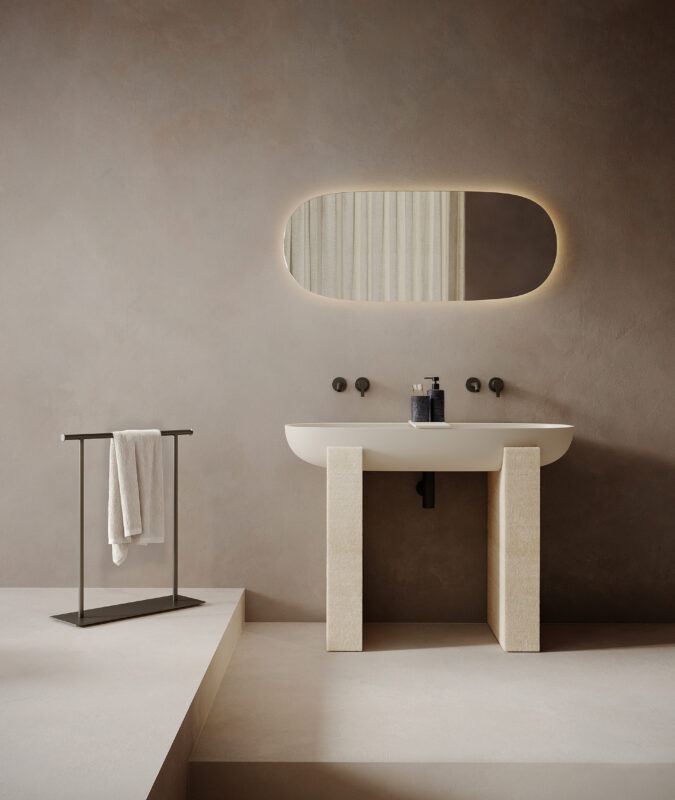
A standout example is the ARA collection by Inbani, where the balance between organic and architectural is pushed further. Here, solid stone monoliths support a soft, oval basin, creating a striking contrast between weight and lightness, structure and fluidity.
There’s also an option within the collection that introduces hand-carved wood fronts, with textures reminiscent of ancient furniture-making techniques. It brings in a sense of history and craftsmanship, layering something tactile and imperfect against otherwise clean, modern forms.
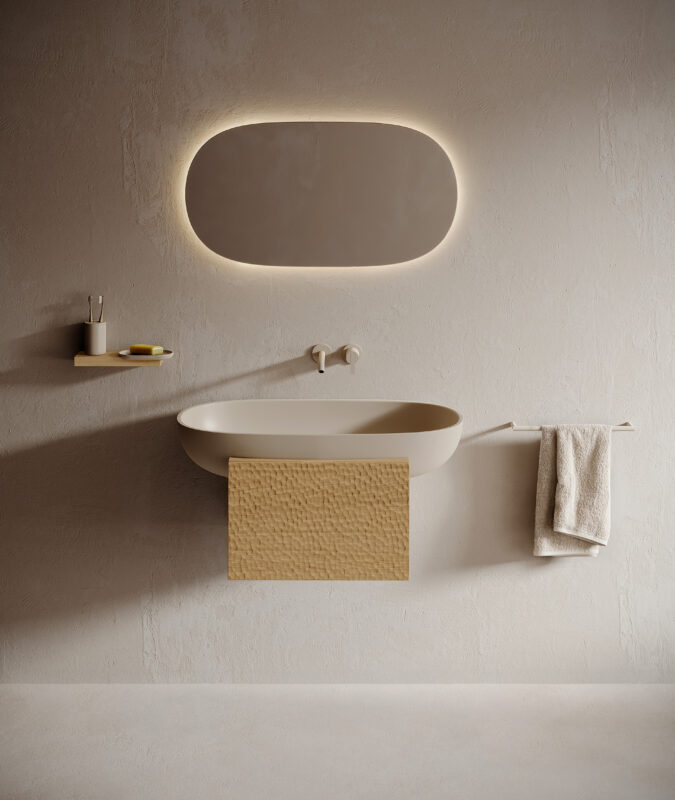
This is where the evolution is happening: not just in soft curves, but in how materials are juxtaposed and interpreted. The result feels grounded, intentional, and much more enduring.
Finish Innovation: PVD Continues to Lead
If there’s one area that continues to expand year over year, it’s finish development, and much of it is being driven by PVD technology.
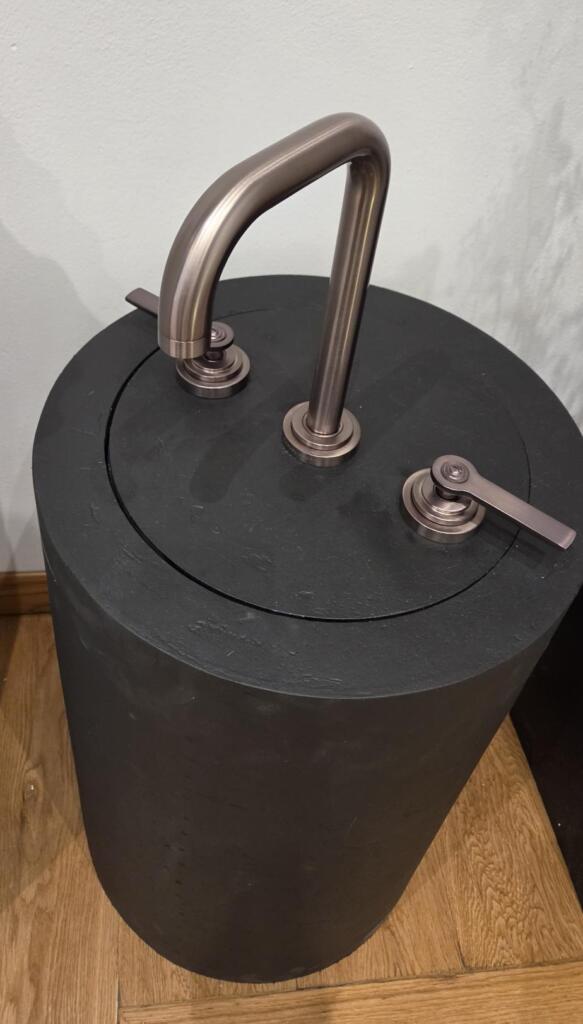
A standout this year is the new Anthracite finish from Samuel Heath. At first glance, it reads as a deep, grounded tone, but look closer and there’s a subtle warmth, almost a hint of lavender coming through the surface. It’s nuanced in a way that feels incredibly current.
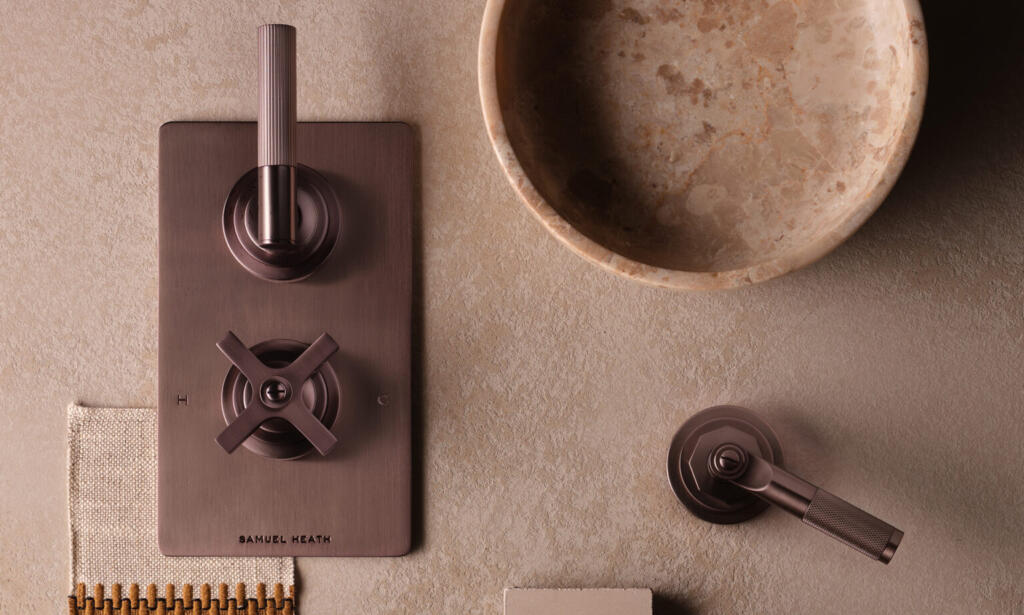
What makes it especially relevant is how well it pairs with the warmer stone palettes we’re seeing throughout the show, materials like rosso laguna, with their rich, red undertones. That interplay between finish and material is becoming more intentional, more curated.
We’re seeing deeper tones, more layered color, and greater consistency across product categories. Finishes are no longer static, they’re expressive.
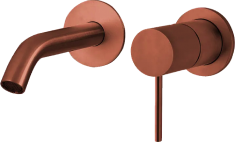
The goal isn’t just durability anymore (though PVD delivers that). It’s creating finishes that feel as considered as the rest of the space.
Our Takeaway
What stands out most this year isn’t a single product, it’s a mindset.
Plumbing is no longer just functional or even purely architectural. It’s becoming personal, tactile, and highly considered.
Materials are softening. Forms are refining. Finishes are deepening.
And collectively, it signals something important: Luxury is shifting from what you see… to what you feel.
At the same time, it’s worth acknowledging that what Alexander Marchant is seeing here in Milan doesn’t always translate immediately to the U.S. market. Some of these presentations may still be conceptual, while others may not yet have gone through the necessary U.S. certification processes, if that’s even part of the manufacturer’s near-term strategy.
There’s often a lag between European innovation and U.S. adoption, particularly in plumbing where compliance and performance standards play such a significant role. It will be interesting to watch not just if these ideas make their way stateside, but when, how, and in what form they ultimately show up in our projects.